DoHa Research Update: Elite Hallstatt Burials from Brzoza.
March is coming to an end, and the DoHa team is pleased to share some of our recent work. This time, we would like to present the results of archaeological and osteological research on burial materials from Brzoza cemetery.
Brzoza is located 15 km from Domasław. The site is being investigated by Professor Tomasz Gralak from the University of Wrocław. Three Hallstatt-period graves identified there so far, each enclosed by a ditch, have produced exceptionally rich and elaborate grave goods. This suggests that, much like those discovered in Domasław — or even to a greater extent — these were elite burials of the period.
Because of its similar chronology and the high status of the burials discovered there, Brzoza is becoming an excellent comparative reference point for research on the Domasław cemetery.
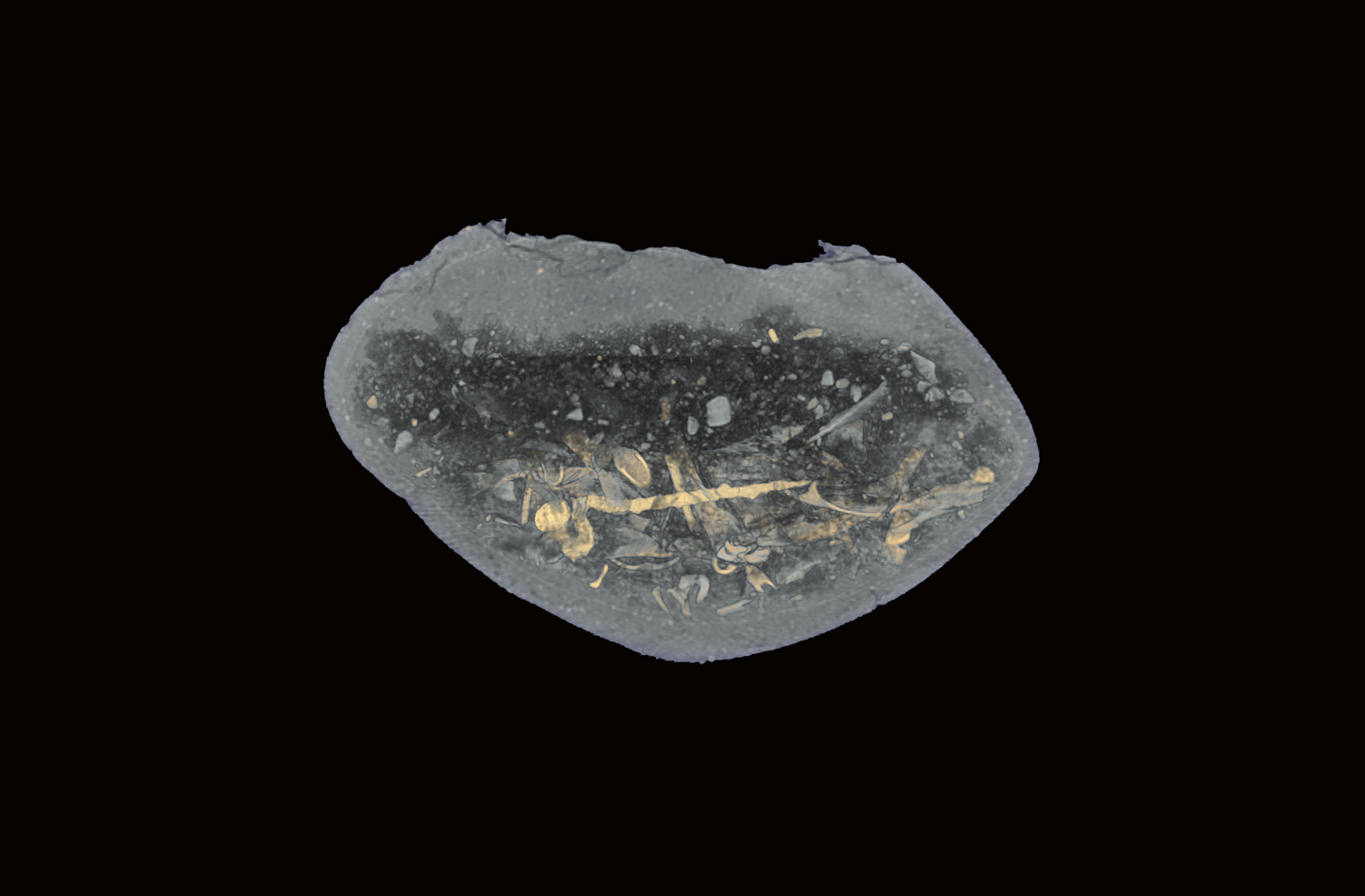
Three urns were found within the graves from Brzoza; however, only one has survived intact to the present day. We therefore set out to document and examine it as thoroughly as possible. The urn was subjected to computed tomography imaging in order to better record its infill and gain further insight into past funerary practices.
The analysis was carried out with the participation of Ada and Bogusia at the Collegium Medicum of the Jagiellonian University, thanks to the kind support of Professor Anita Szczepanek. What a remarkable moment it was when a beautiful pin with a swan-shaped head appeared before our eyes, located in the central part of the vessel.
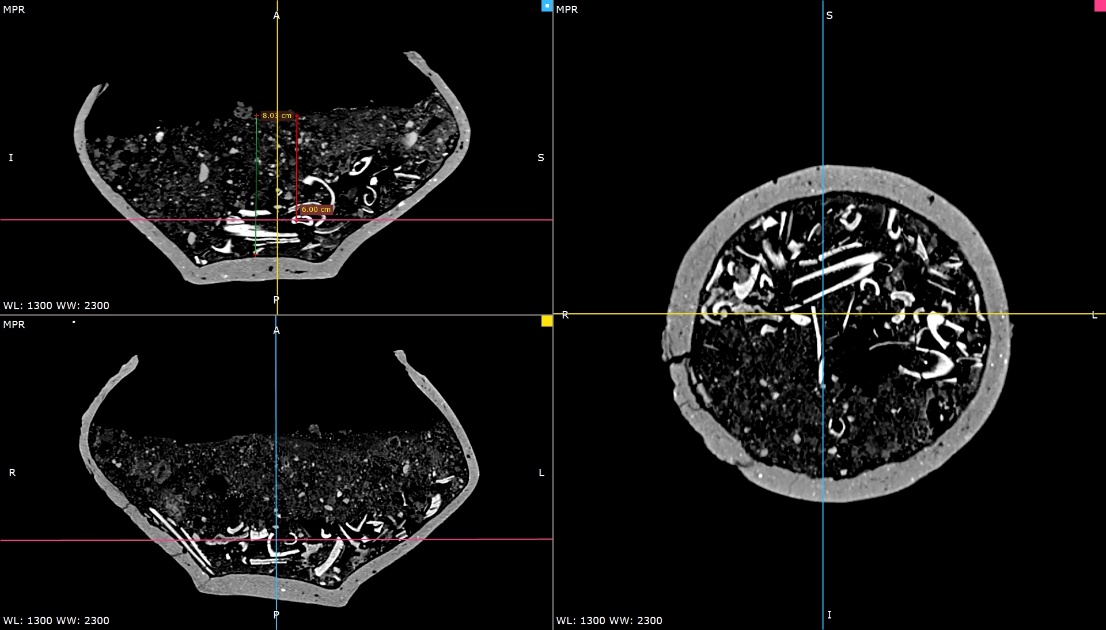
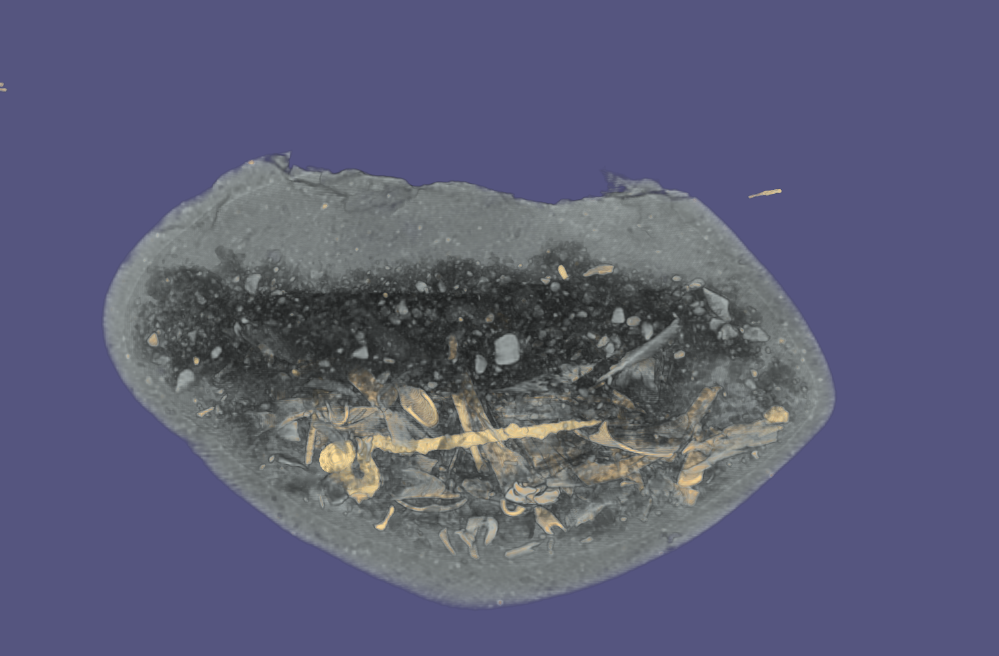
Last week, Ada carried out the exploration of this urn. The vessel was excavated in mechanical layers of 3 cm thickness in order to document the skeletal representation within the urn more precisely. The retrieved cremated human remains were subsequently subjected to osteological and osteometric analyses. These studies aim to better understand the biological profile of the individual and to provide further insight into funerary practices, particularly those associated with burning and post-burning activities.
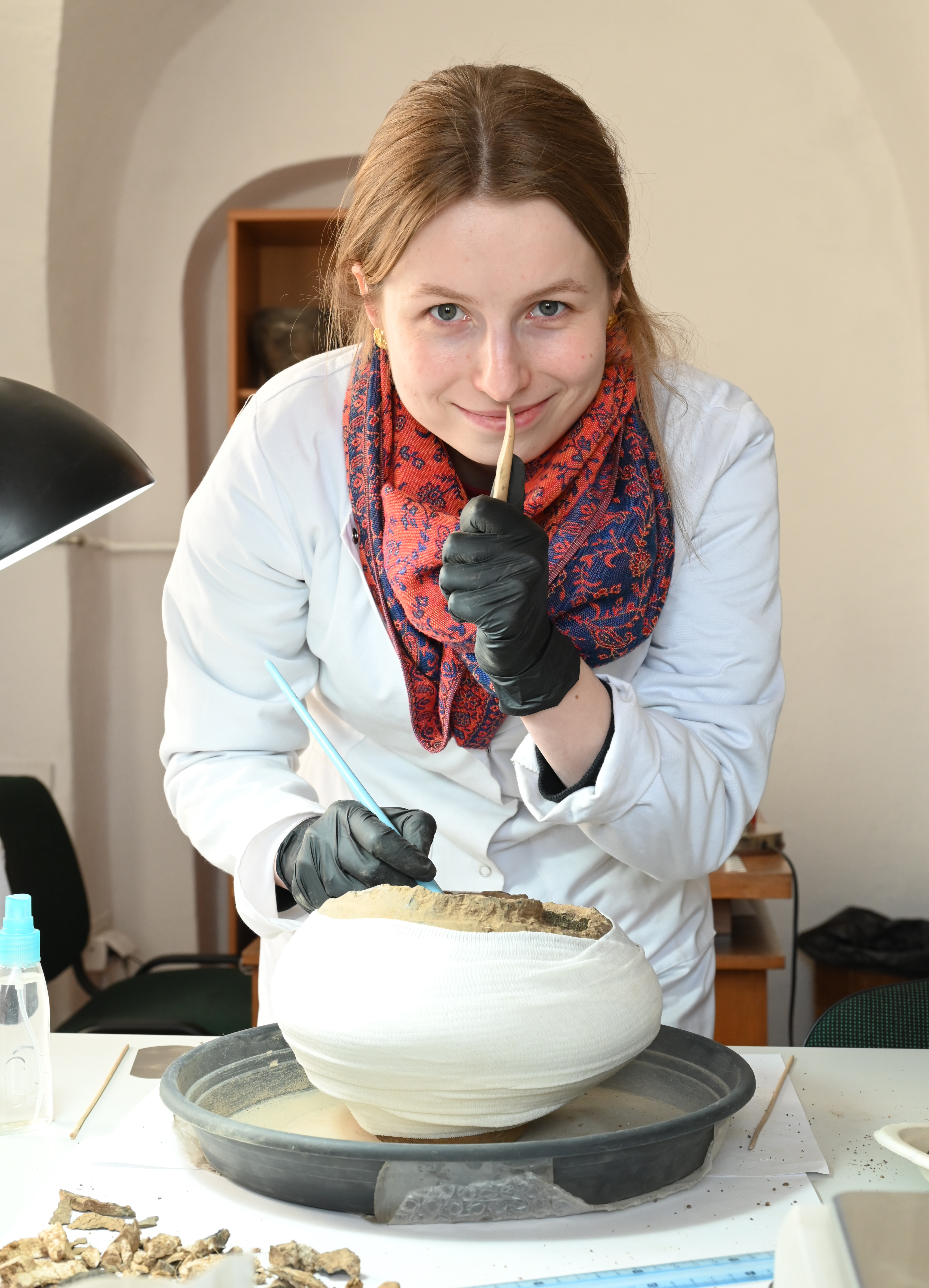
As with every stage of the DoHa project, this work involved careful and detailed documentation, team consultation, and many hours of close analytical study behind the scenes.