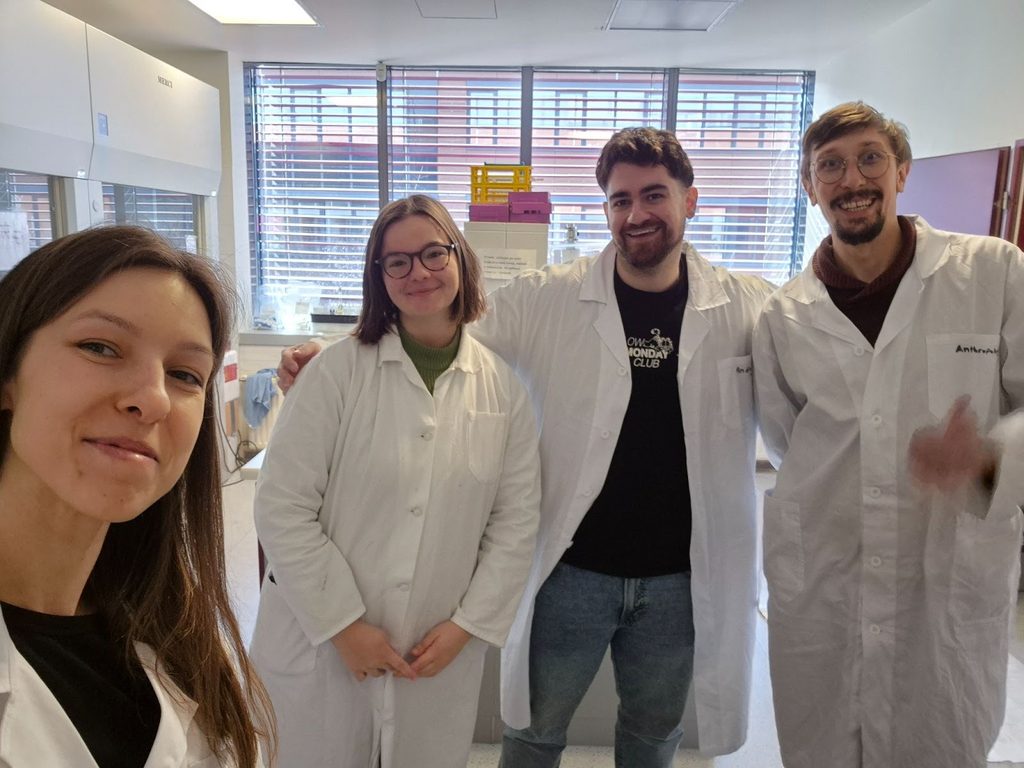
Between 9 and 13 March, Dr Bogumiła Wolska and Dr Adam Budziszewski visited the Department of Anthropology at Masaryk University in Brno for a research stay focused on the laboratory analysis of cremated human remains. The visit was an important part of the DoHA project, combining practical work on the laboratory stages of strontium stable isotope analysis with methodological exchange in Fourier Transform Infrared Spectroscopy (FTIR) applied to cremated human bone from the Domasław cemetery.
Under the supervision of Dr Kevin Salesse, head of the Isotope Lab, and with the invaluable support of his colleagues – Andrej Bakleh, Audrey Rowe, Gabriela Sečkářová and Anna Klimtová – we worked through key stages of isotopic and spectroscopic analysis of cremated human remains. The stay supported our ongoing research into Hallstatt-period cremation practices and enabled us to begin work on samples of cremated human remains from Domasław.
Mechanical pre-treatment of cremated bone samples
The first stage of sample preparation, following initial sample selection, was the mechanical pre-treatment of cremated bones. Newly selected samples were processed in the sample preparation laboratory, allowing participants to become familiar with the necessary steps and with the specific challenges posed by highly calcined archaeological material.
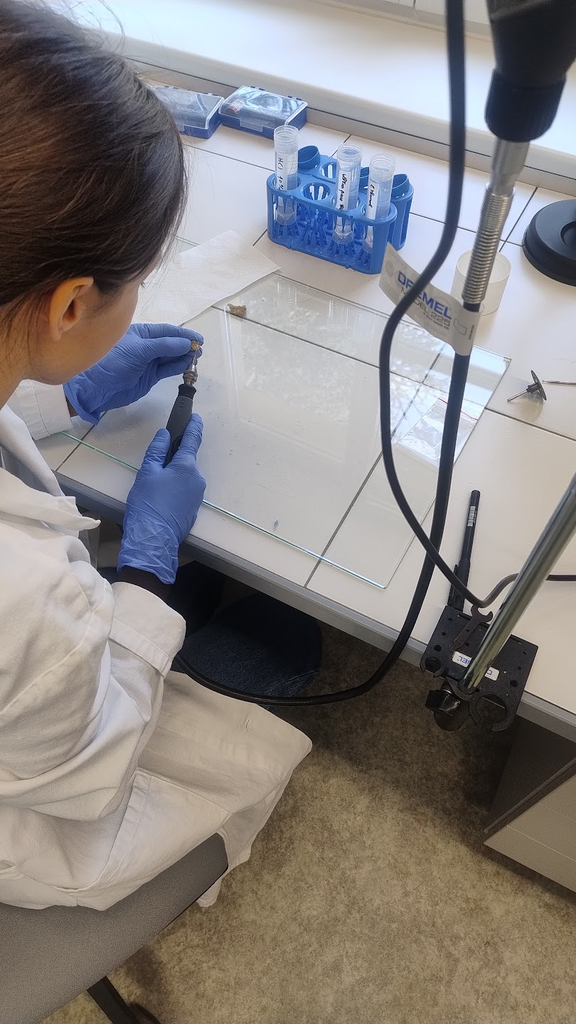
The purpose of this stage is to remove external contaminants and exclude non-calcined bone fragments so that all further analytical procedures are performed on a clean sample. Proper preparation at this point is essential for strontium isotope analysis.
After cleaning, the samples were grinded into fine powder and separated by sieving into two size fractions. The smaller fraction was used for spectrometric FTIR analysis, while the remaining bone powder was archived and prepared for strontium isotope analysis.
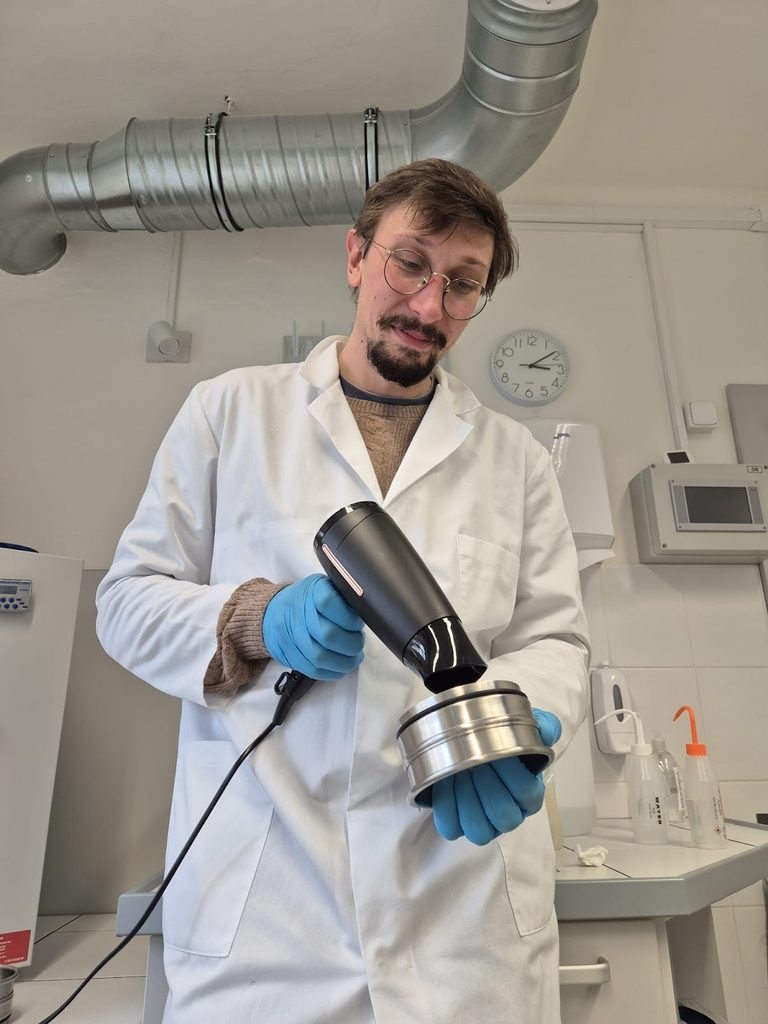
A crucial aspect of this work is maintaining strict cleanliness of all laboratory equipment between samples. Sieves and tools must be carefully washed and completely dried before reuse in order to prevent contamination. Even a tiny residue of bone powder from a previous sample could affect the analytical results. In practice, one of the most effective methods proved to be surprisingly simple: thoroughly drying the sieves by hand with a hairdryer.
Clean laboratory procedures and strontium separation
Our stay in Brno was not limited to the manual pretreatment of bone samples. The programme also included work in several specialised laboratory facilities at the Bohunice and Kotlářská campuses of Masaryk University.
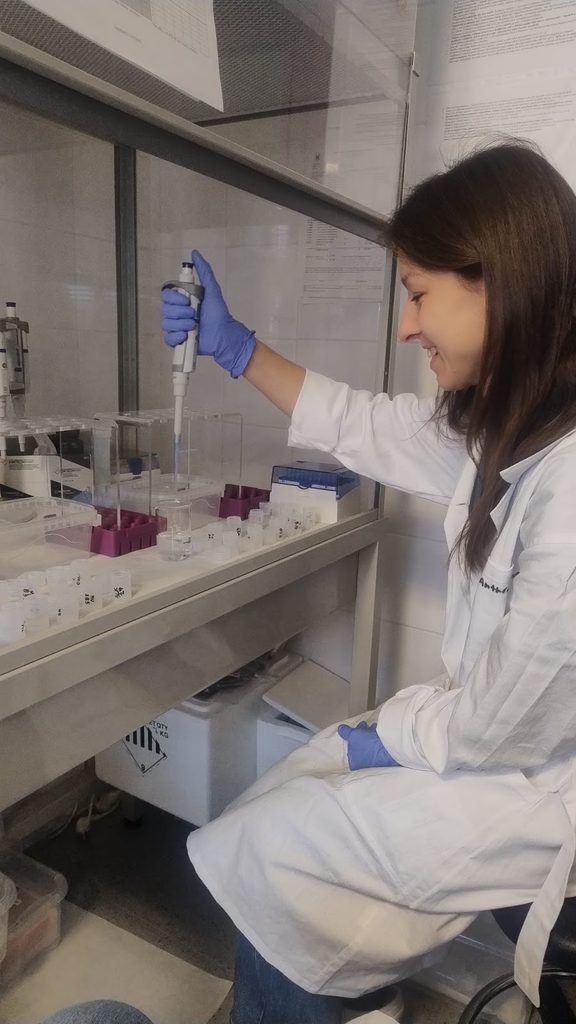
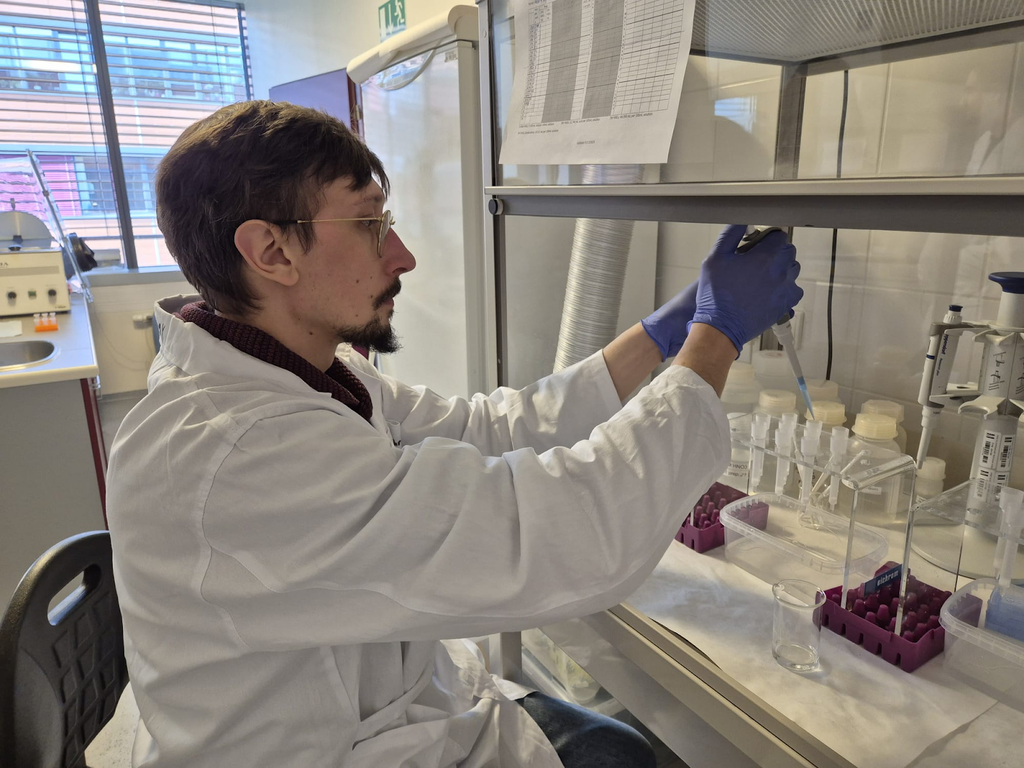
A particularly important part of the visit was the practical training in strontium separation procedures carried out in the clean laboratory at the Department of Chemistry at Brno-Bohunice Campus. These procedures are essential for preparing archaeological bone samples for strontium isotope analysis. Previously pretreated DoHA samples were used to demonstrate and practise the full separation workflow.
Bone powder samples were rinsed several times with nitric acid and placed in ultrasonic baths and hotplate in order to obtain strontium for further analysis at the Brussels Bioarchaeological Laboratory.
FTIR analysis of cremated human remains
The visit also included work on cremated human bones using Fourier Transform Infrared Spectroscopy (FTIR). FTIR analysis is widely used to investigate the chemical and structural properties of bone tissue, enabling the detection of changes induced by high-temperature exposure.
This part of the stay provided an opportunity to discuss analytical procedures, compare laboratory practice, and work with the FTIR equipment available at the Department of Physics of Masaryk University. The analyses help assess whether selected bone samples are fully calcined, which is an important step in confirming their suitability for further isotopic study.
An important step in DoHa research
The visit to Masaryk University in Brno was an important part of the DoHa project. It provided practical training in strontium isotope laboratory procedures, enabled further work on cremated bone samples from Domasław, strengthened international collaboration, and supported the methodological framework of our research on cremation practices in the Hallstatt-period cemetery at Domasław.
We are very grateful to our colleagues in Brno for their expertise, generosity and support.