Gallery of Graves
Domasław cemetery
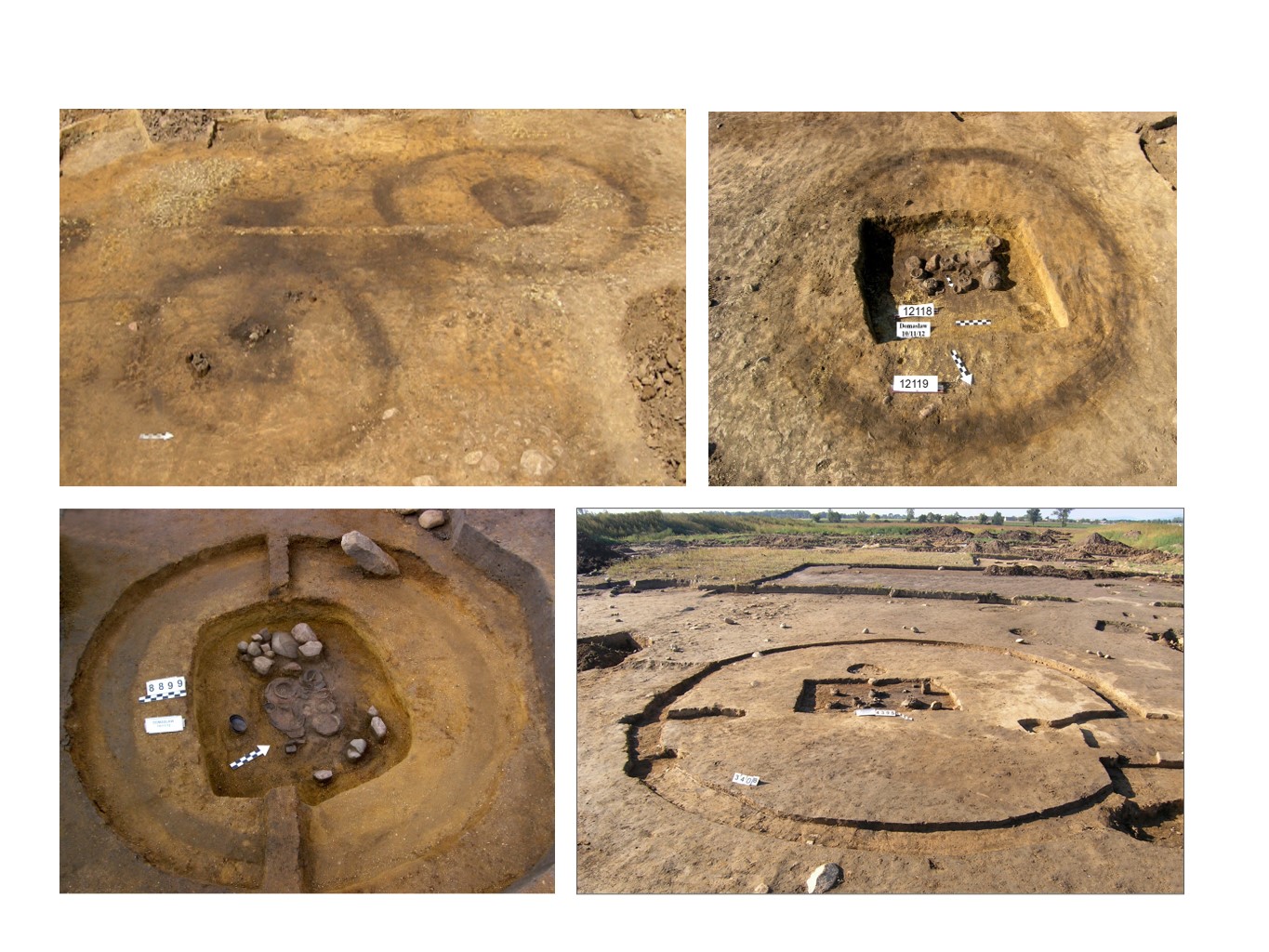
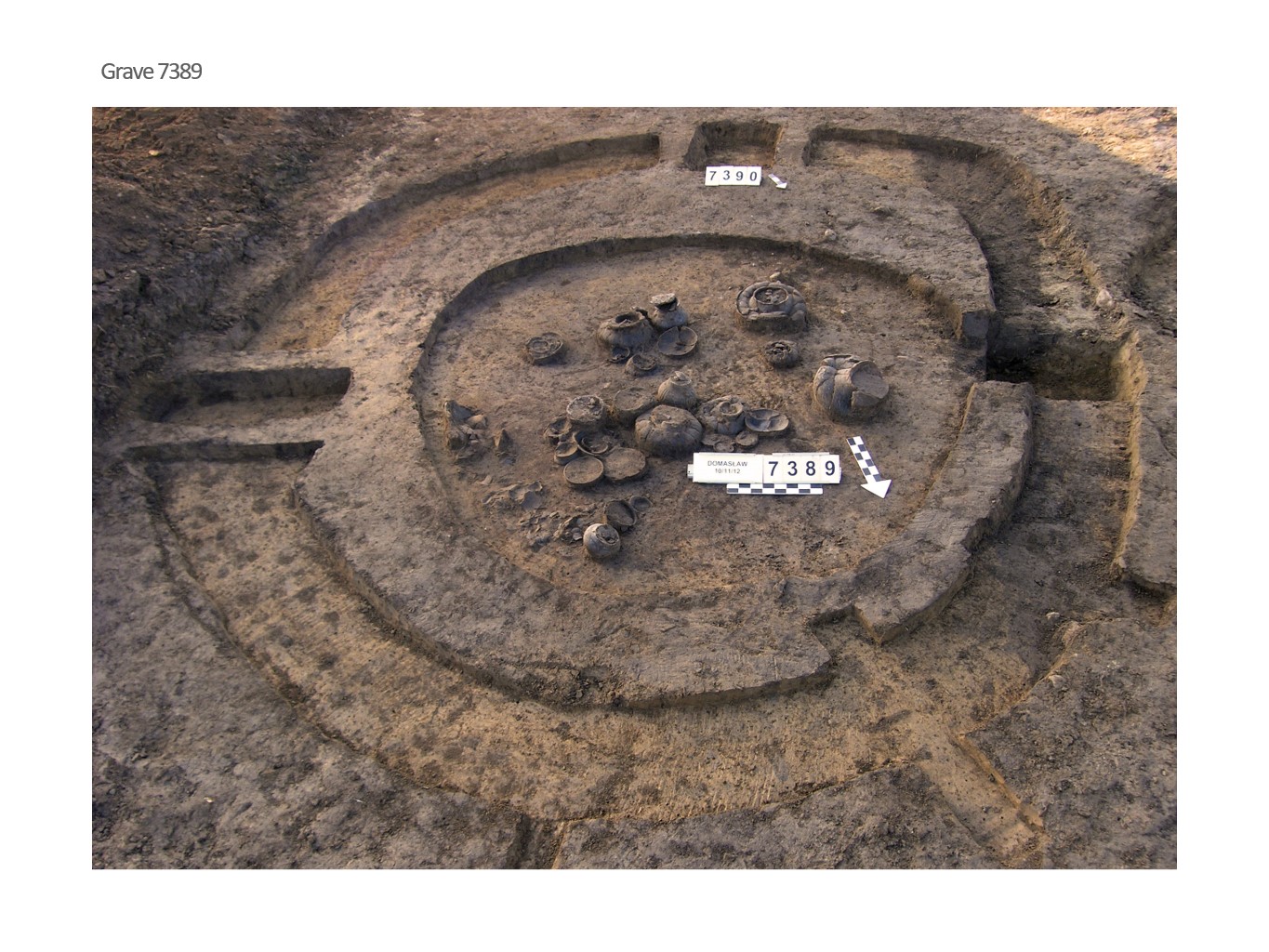
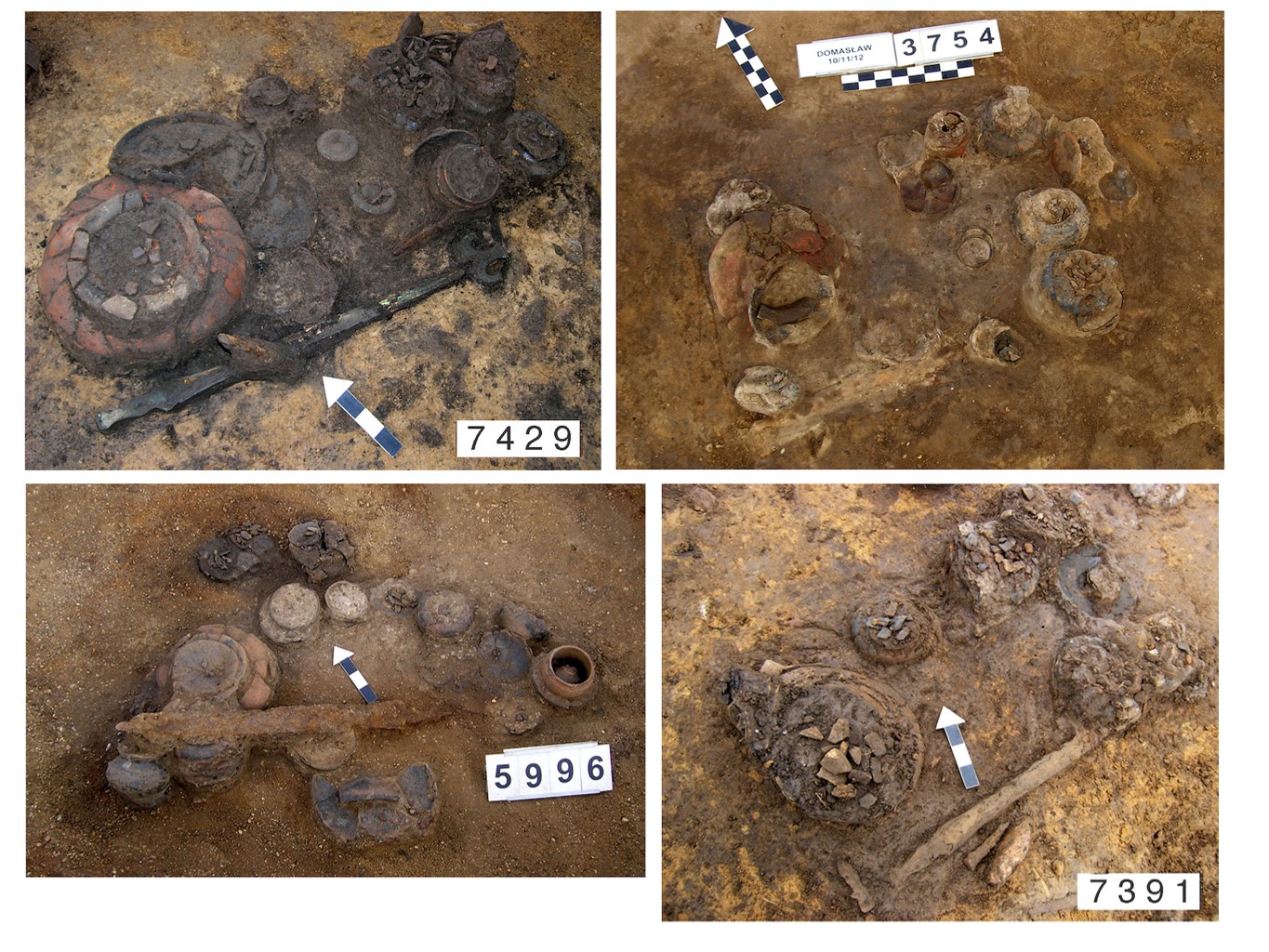
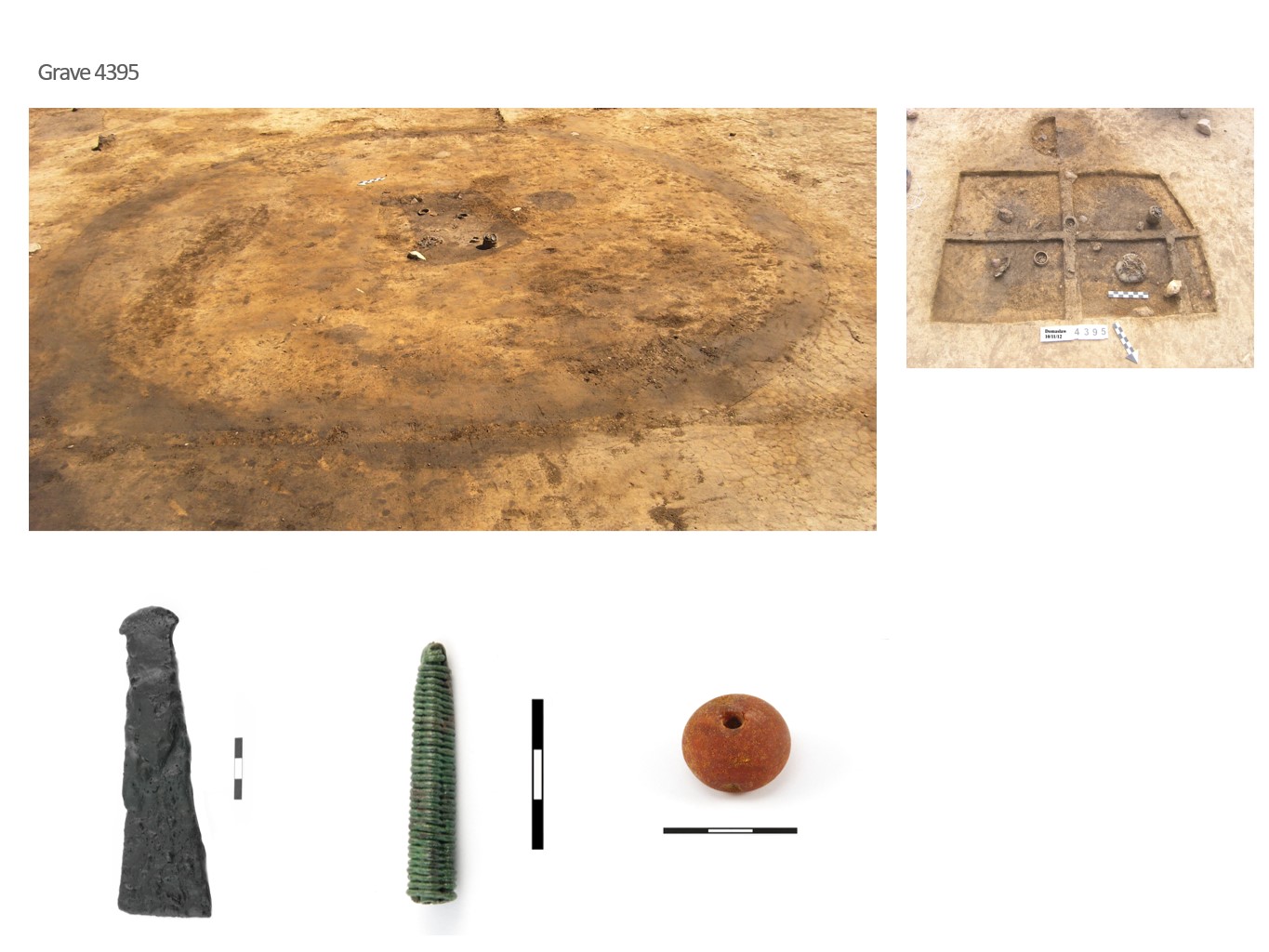
The Domasław cemetery is presented here through a photographic gallery documenting selected graves, grave goods, and spatial arrangements recorded in the archival materials of the Institute of Archaeology and Ethnology of the Polish Academy of Sciences. The images include plans, visualisations, and photographs that capture chamber tombs, graves enclosed by circular ditches, and burials containing weapons, jewellery, and everyday objects. The material focuses on the Early Iron Age context associated with the Hallstatt cultural horizon.
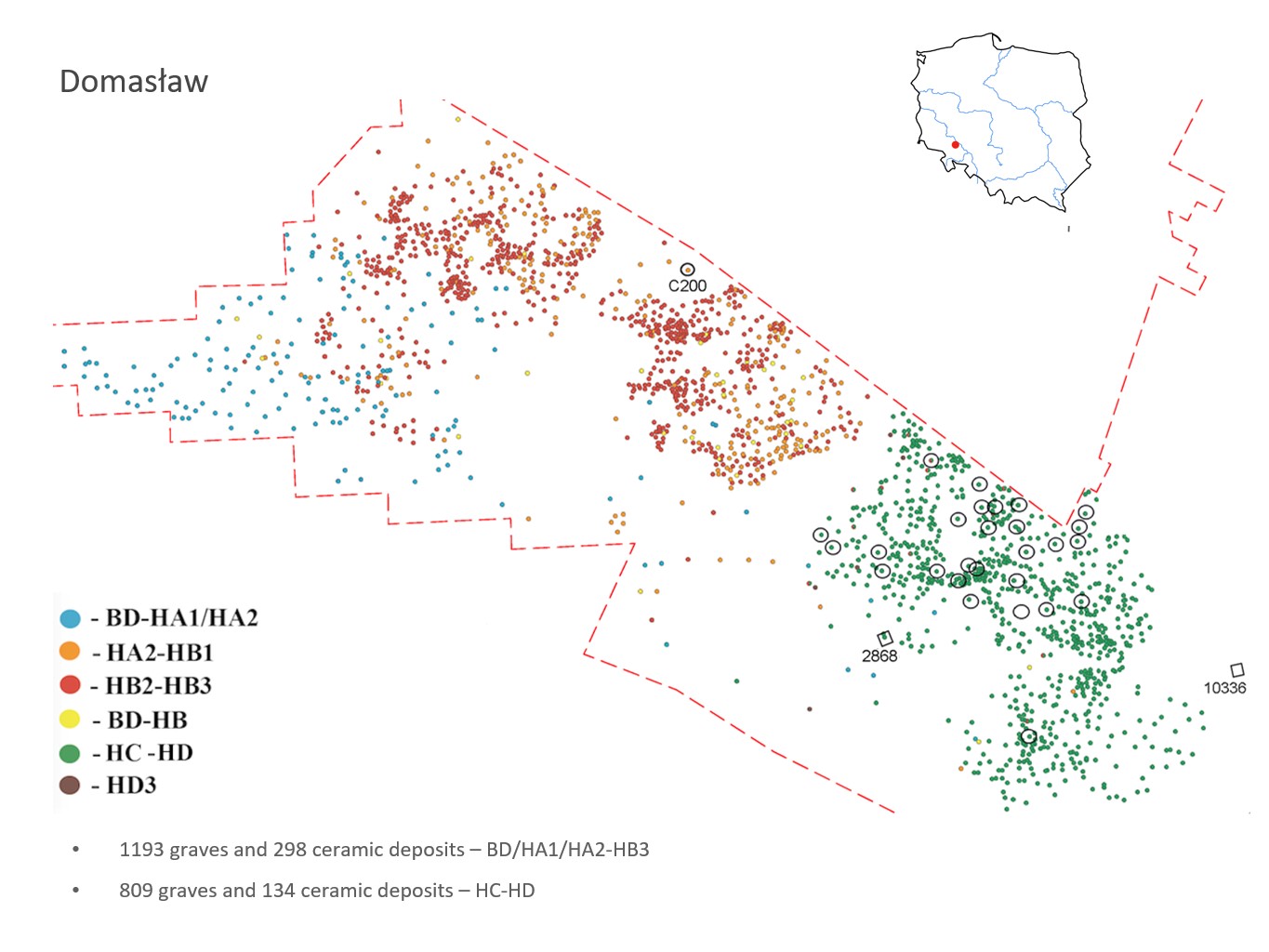
Plan of the Cemetery
We begin with the phased plan of the Domasław cemetery, which sets the finds in space and time—showing how Bronze Age fields give way to Hallstatt-period zones and where the featured graves sit within that sequence.
Hallstatt Period Graves
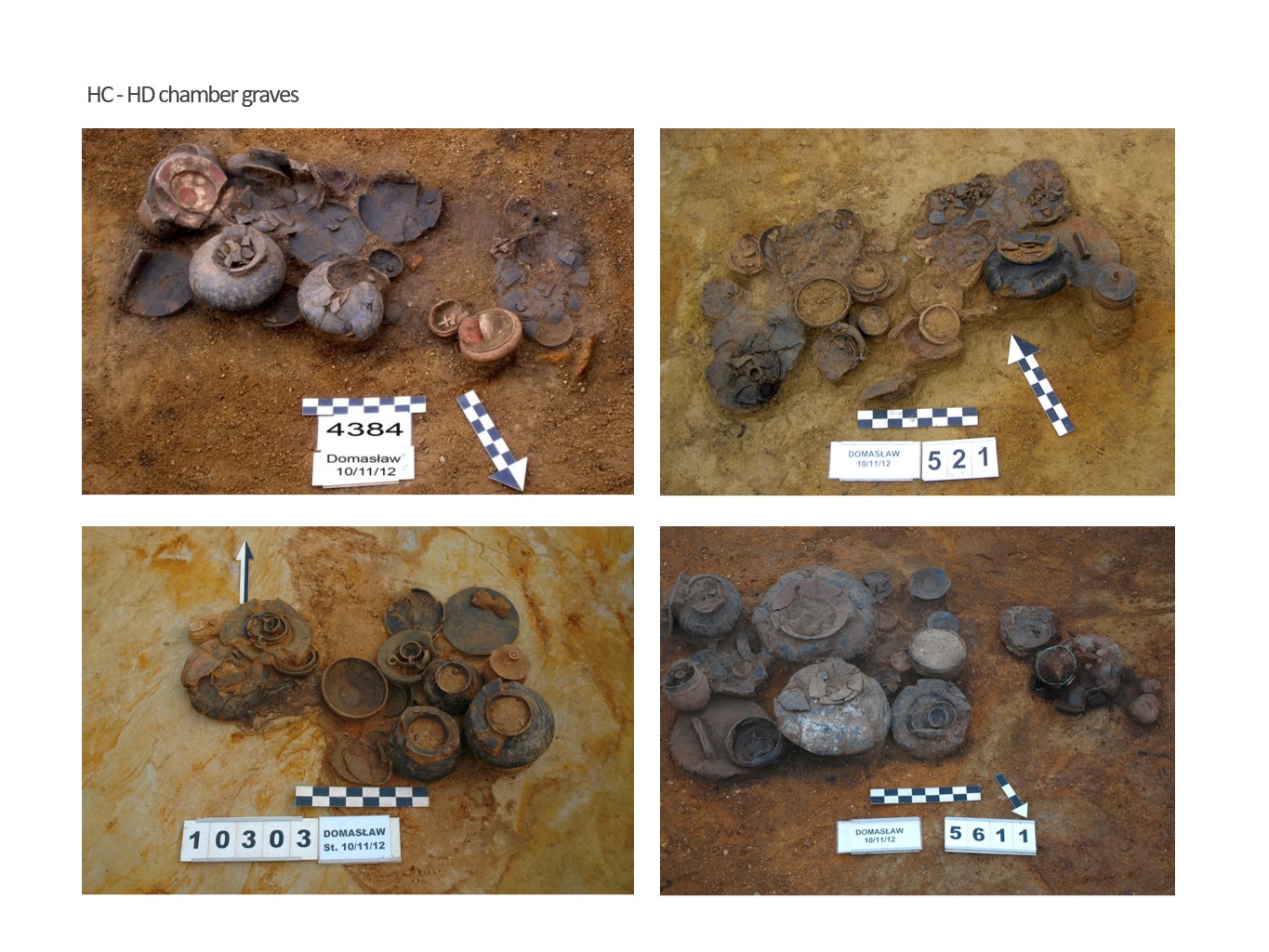
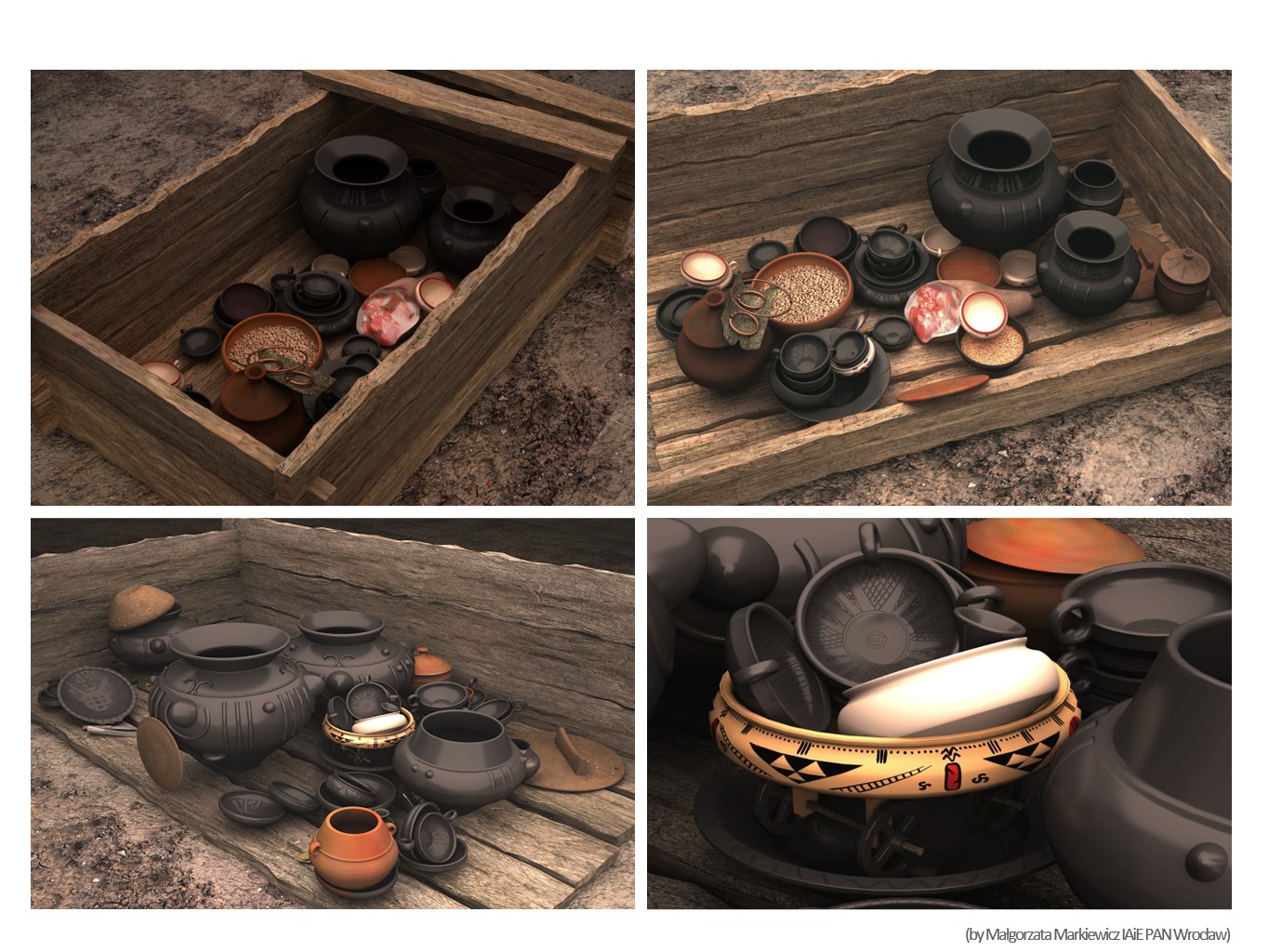
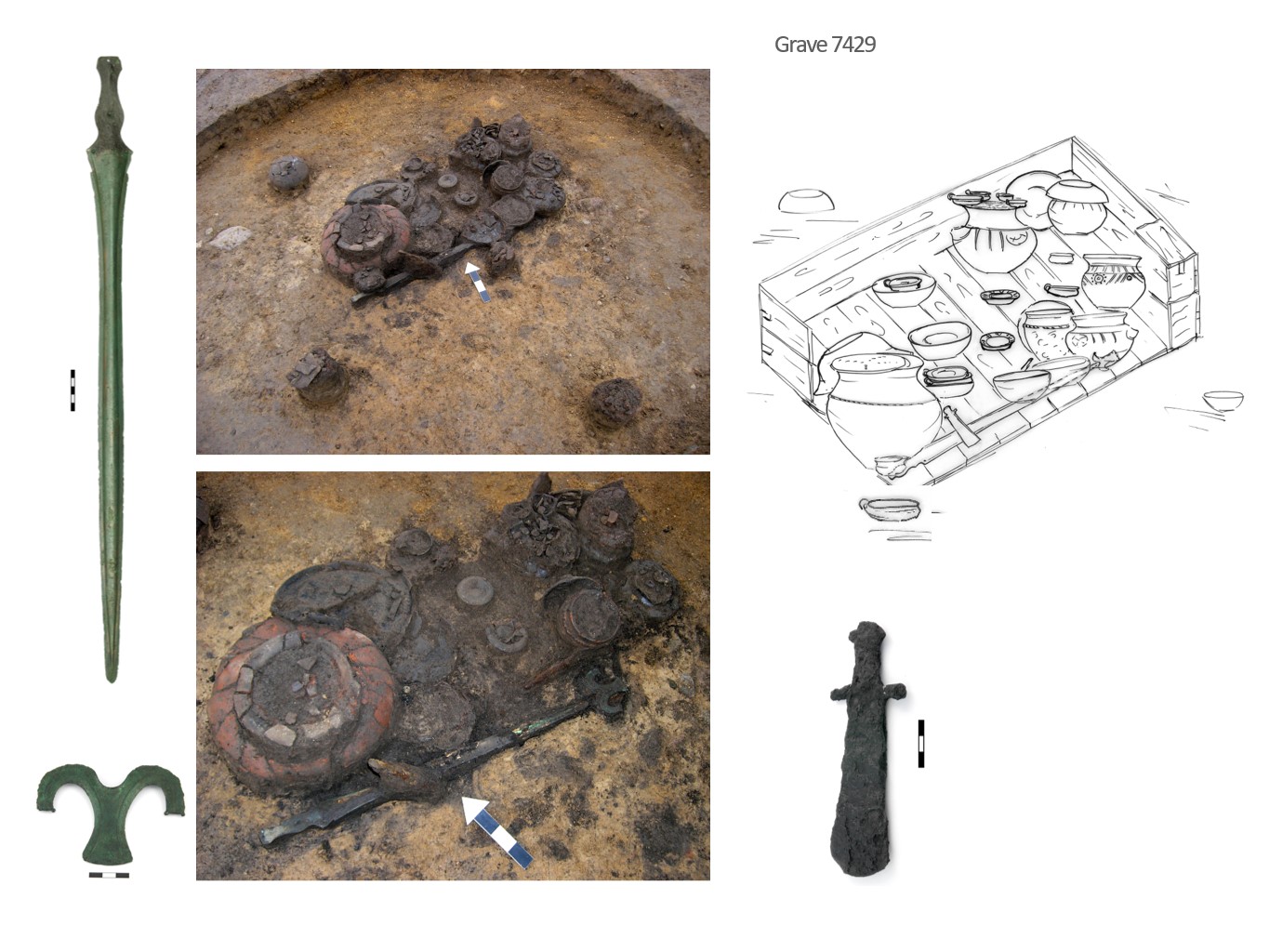
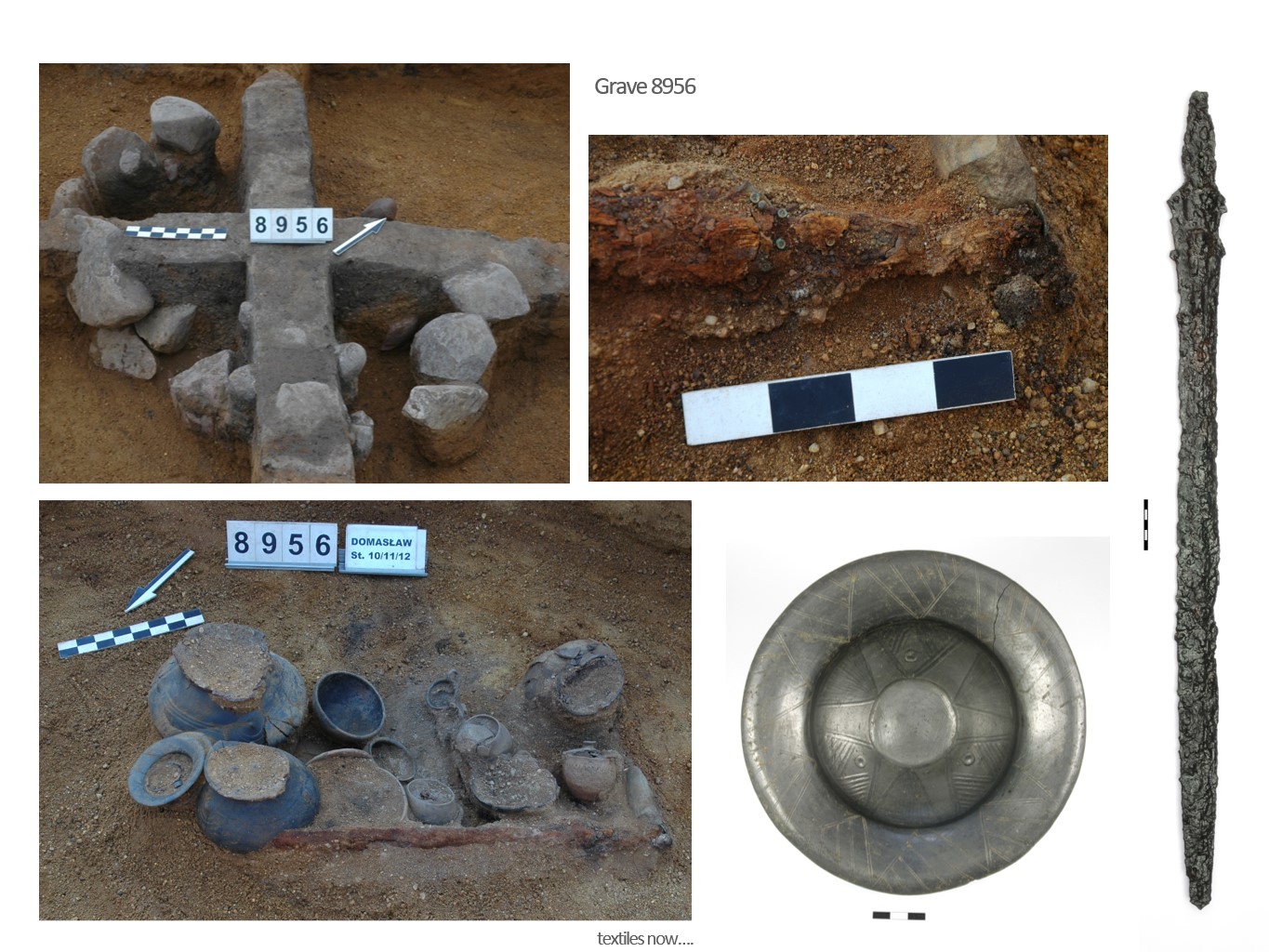
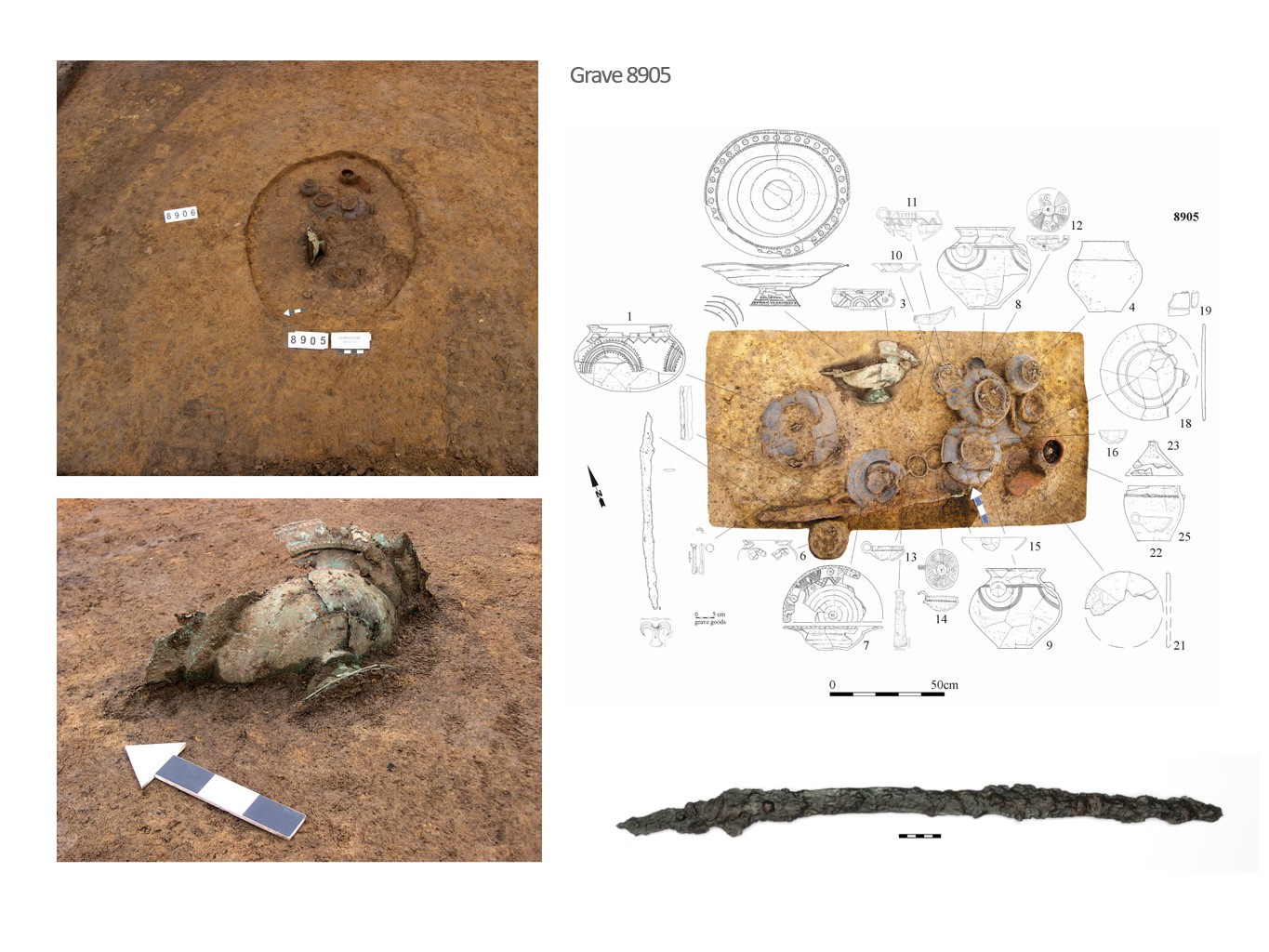
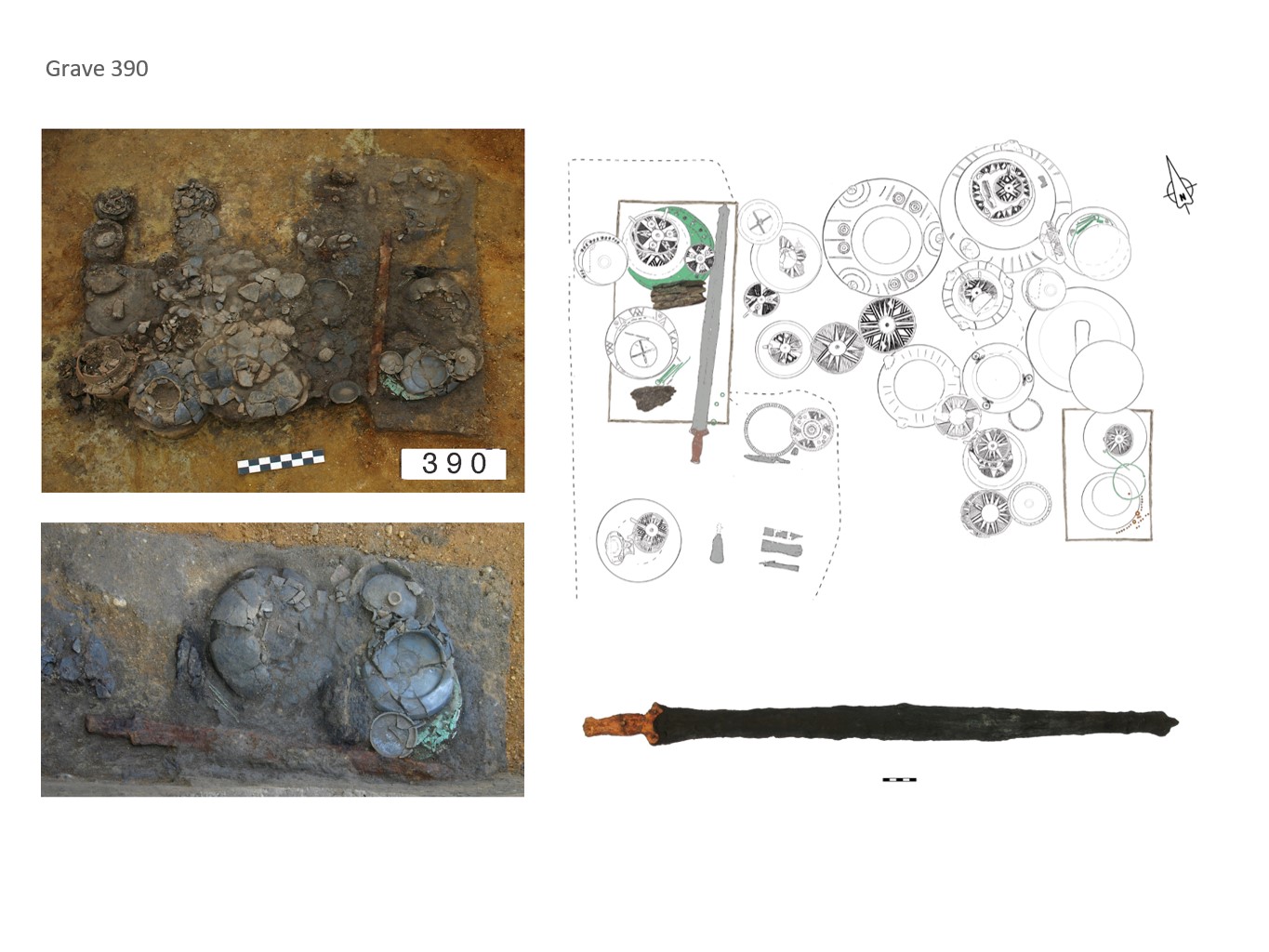
This gallery opens with the chamber graves: rectilinear wooden chambers set in oval or circular pits, often deep and carefully engineered. Plans, sections, and a visualisation series show organised space inside the grave—urns, paired vases, and stacks of cups and bowls—so the interior reads as a staged banquet rather than a random assortment.
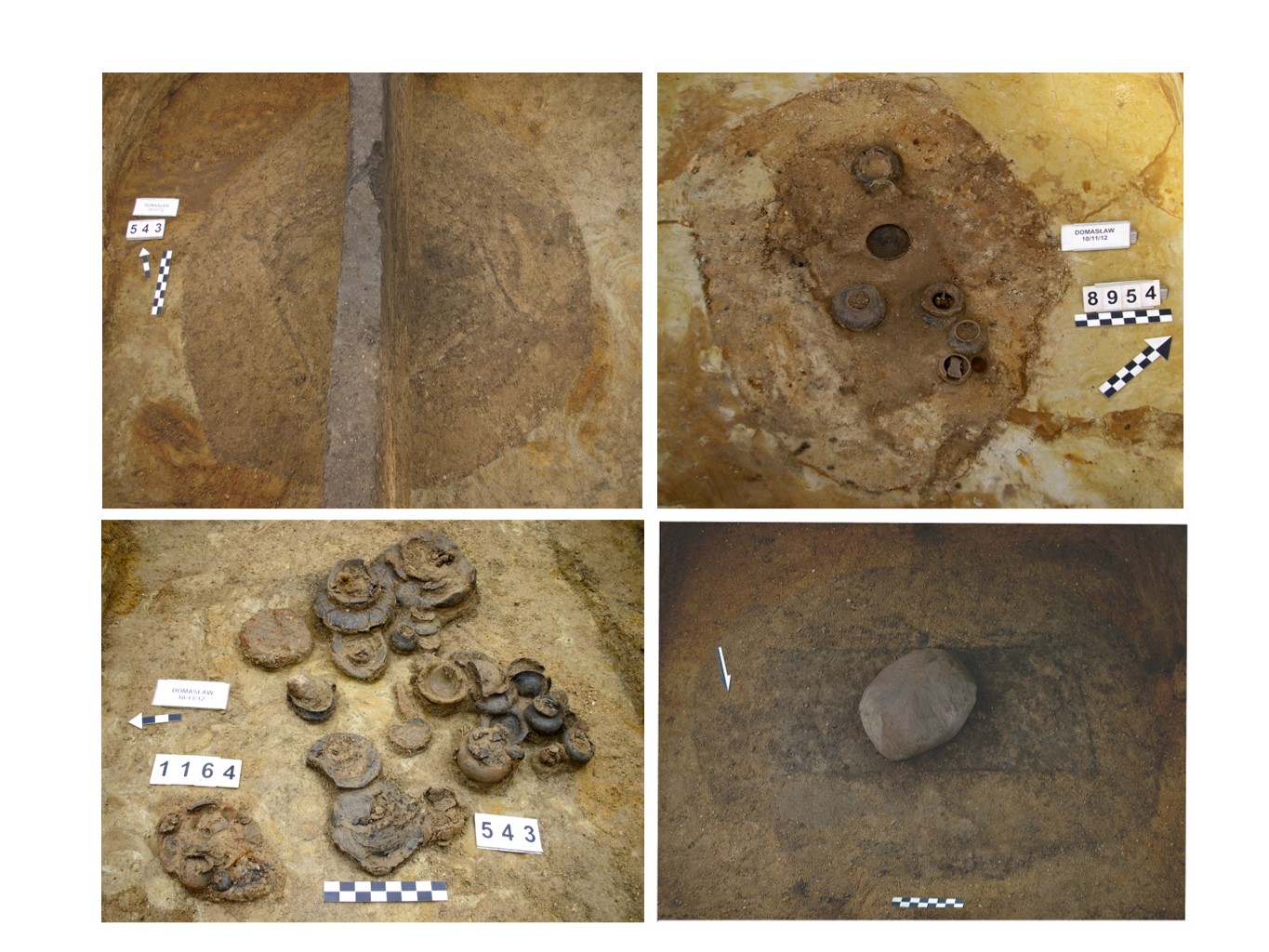
The focus then shifts to graves surrounded by circular ditches and weapon burials, where both architecture and equipment serve as symbols of status. Ditch-enclosed monuments frame selected chambers at ground level, while weapon sets—especially sword burials—anchor Domasław within the wider Hallstatt elite display, frequently pairing arms with high-prestige drinkware.
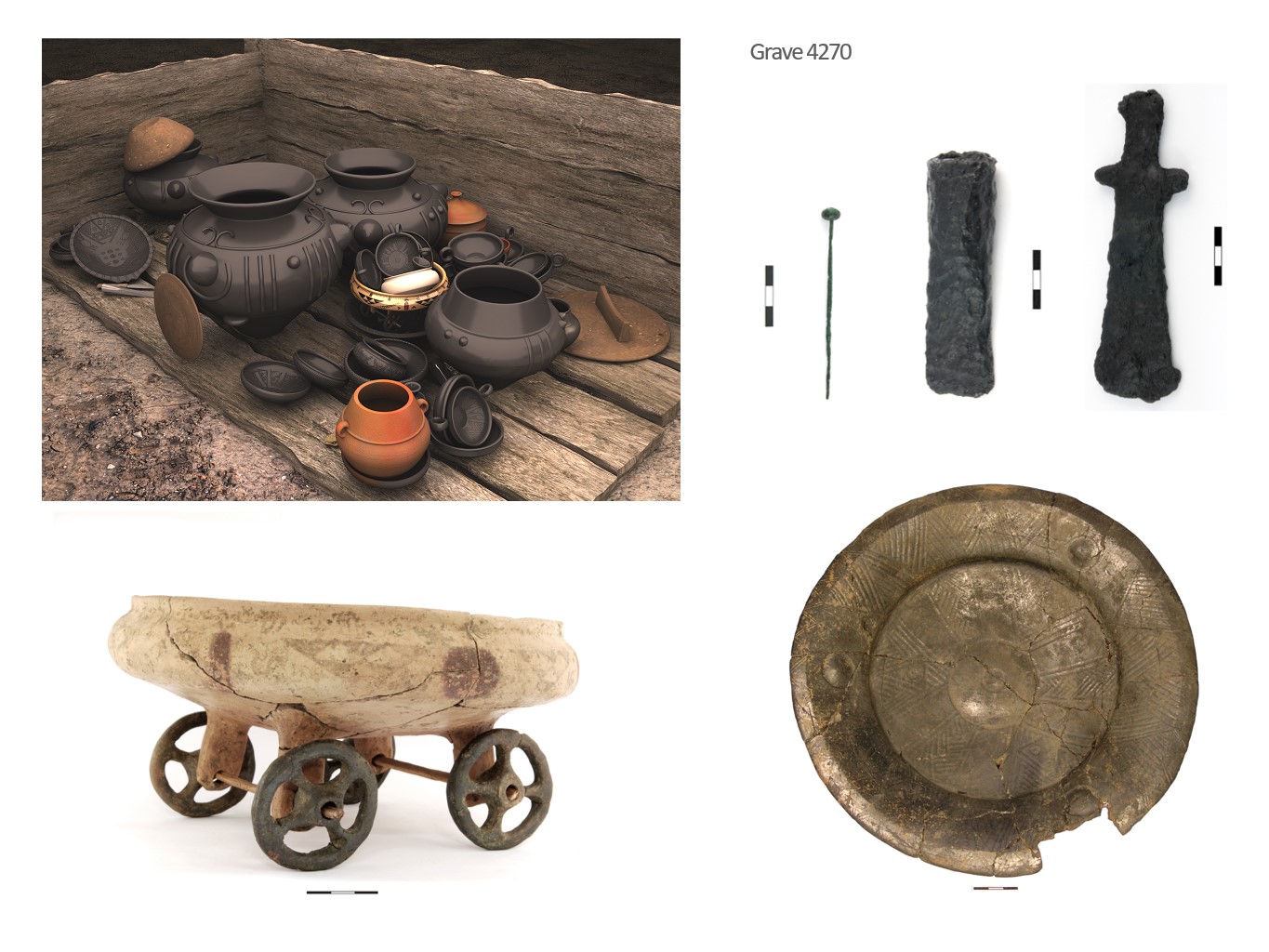
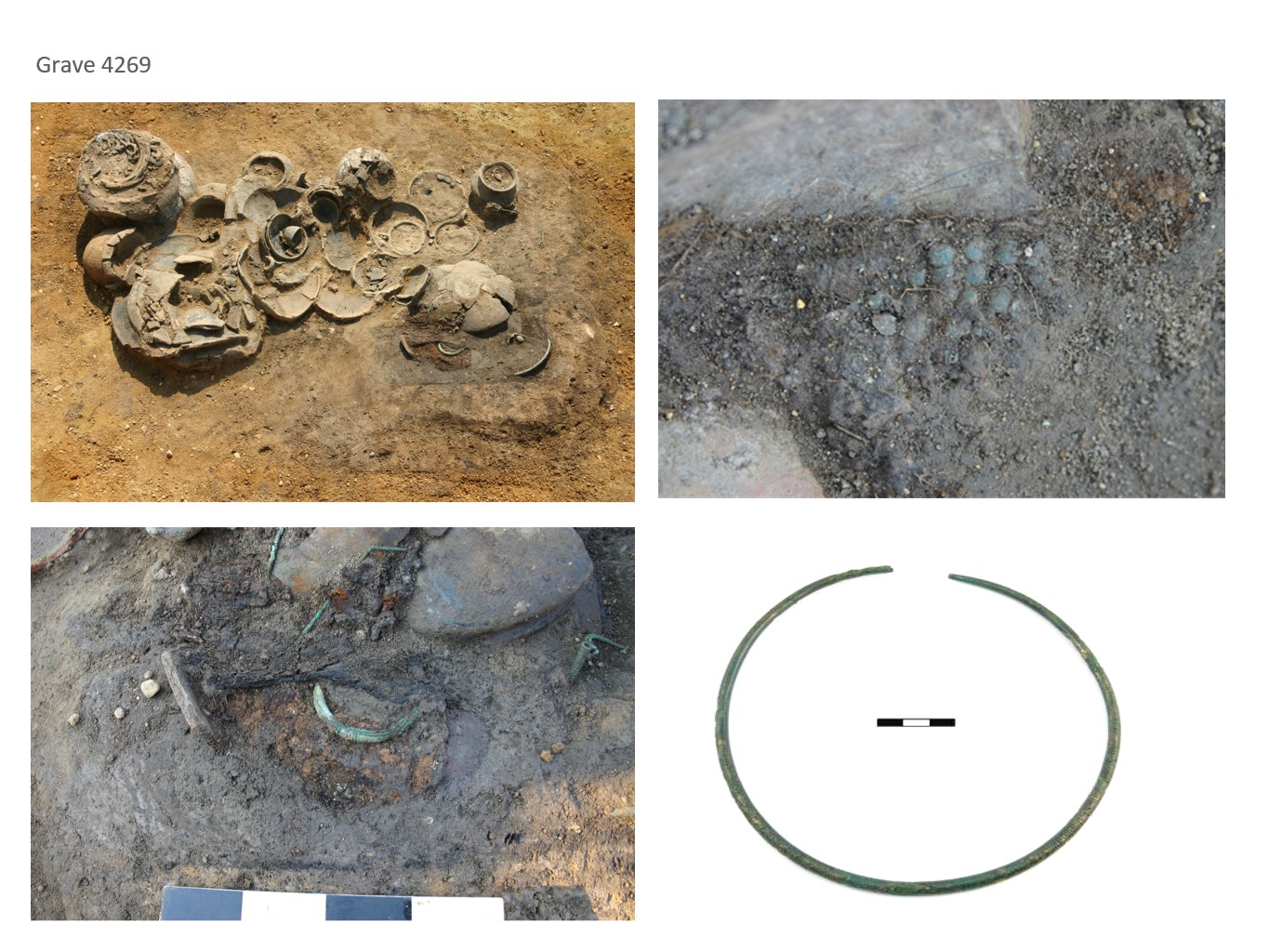
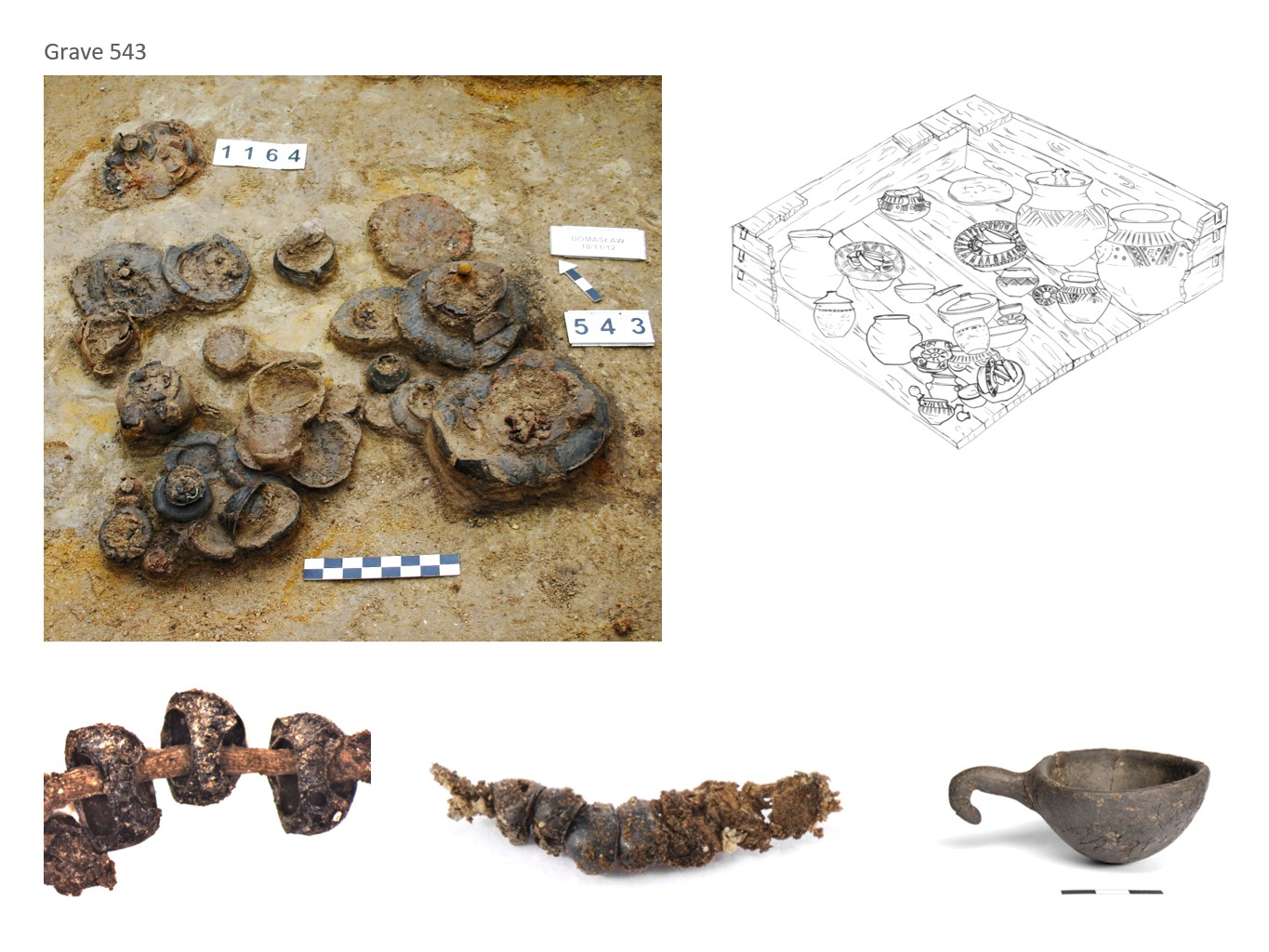
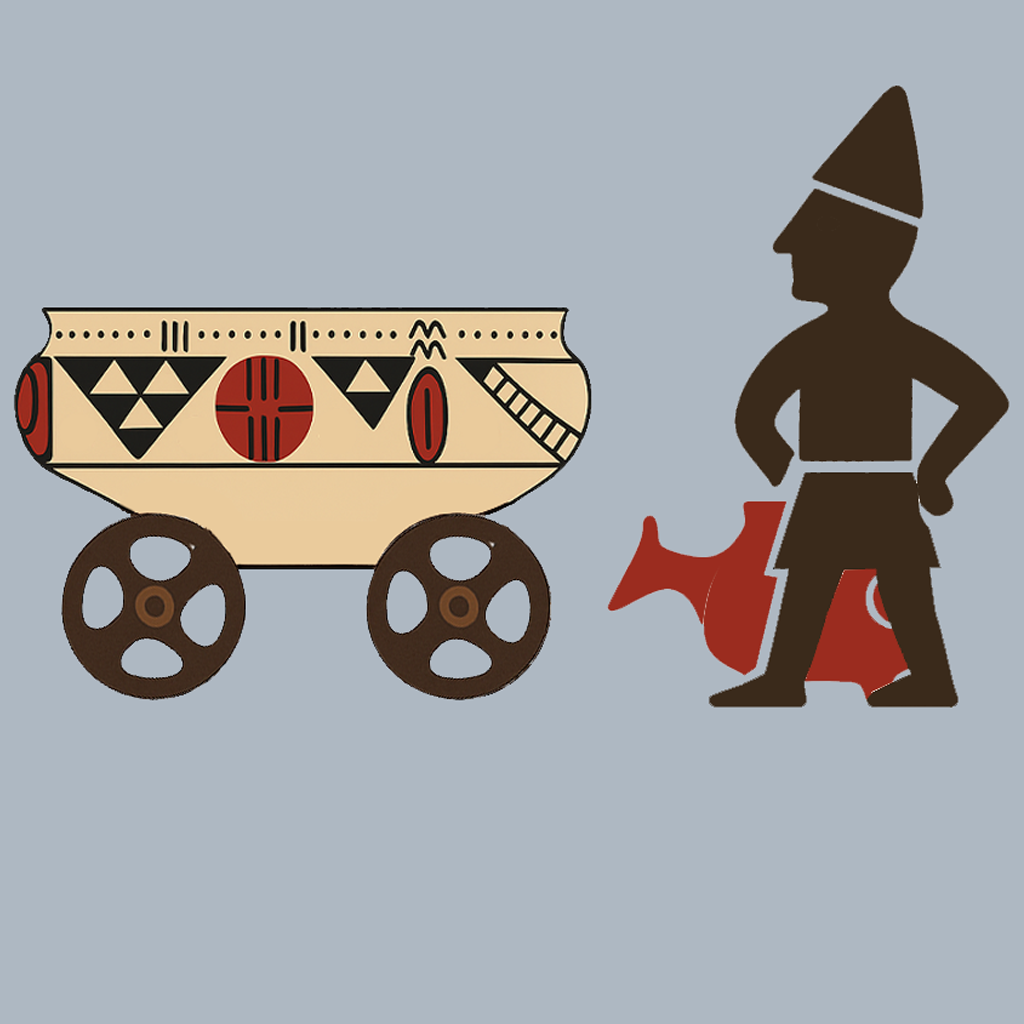
The sequence highlights several exceptional assemblages. Grave 4270 includes a ceramic cult wagon, a theatrical centrepiece among special forms. Grave 4269 preserves a wooden box filled with ornaments, a curated package of display items rather than isolated pieces. Finally, Grave 543 stands out for the preservation of beetles wound onto grass, an extraordinary organic detail that captures the care and symbolism invested in the funerary rite. Seen together—chambers, visualisations, ditch-enclosed graves, weapons, and lavish adornment—these burials chart the full expressive range of Hallstatt funerary performance at Domasław.
Grave Goods from Domasław
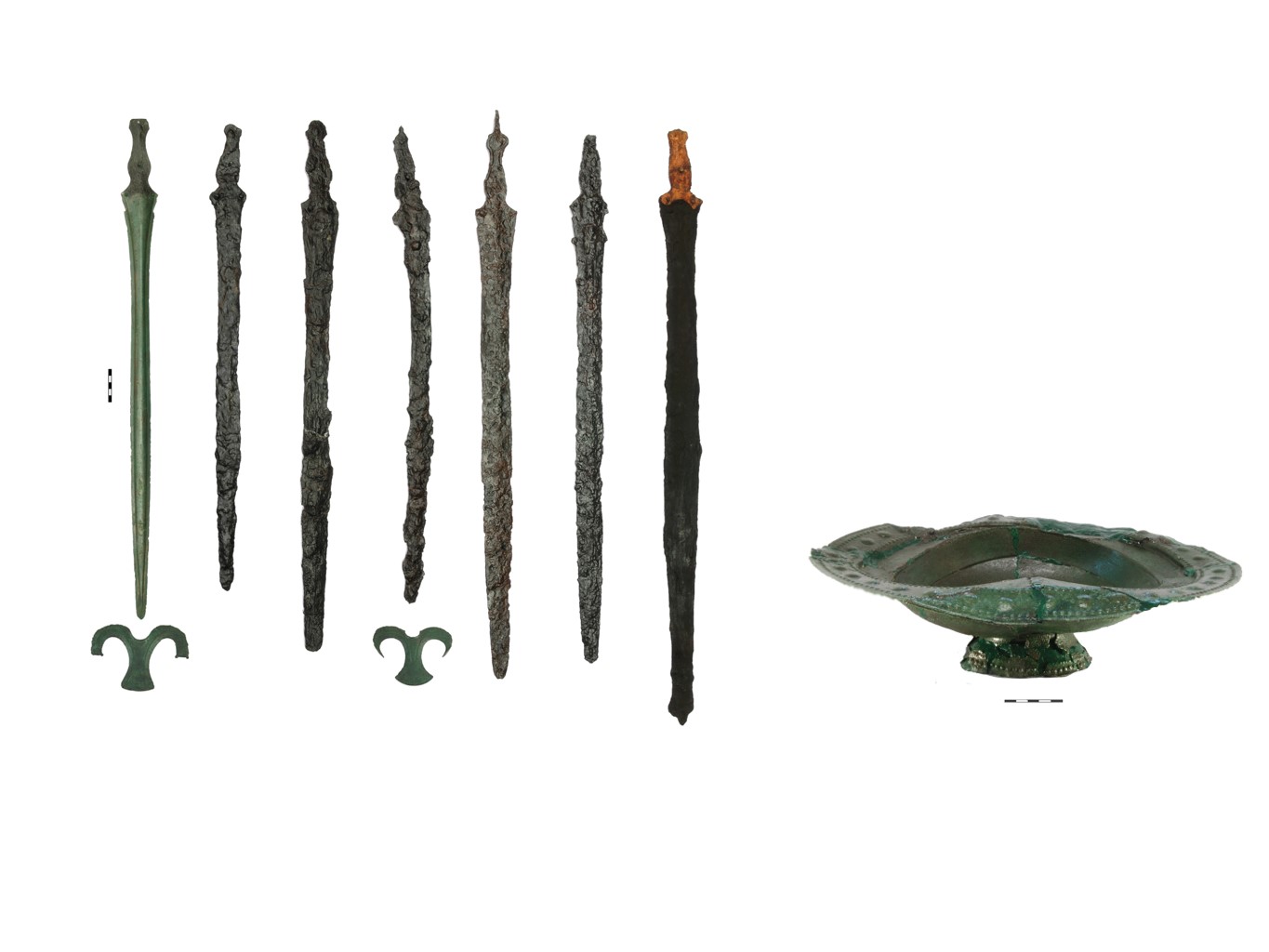
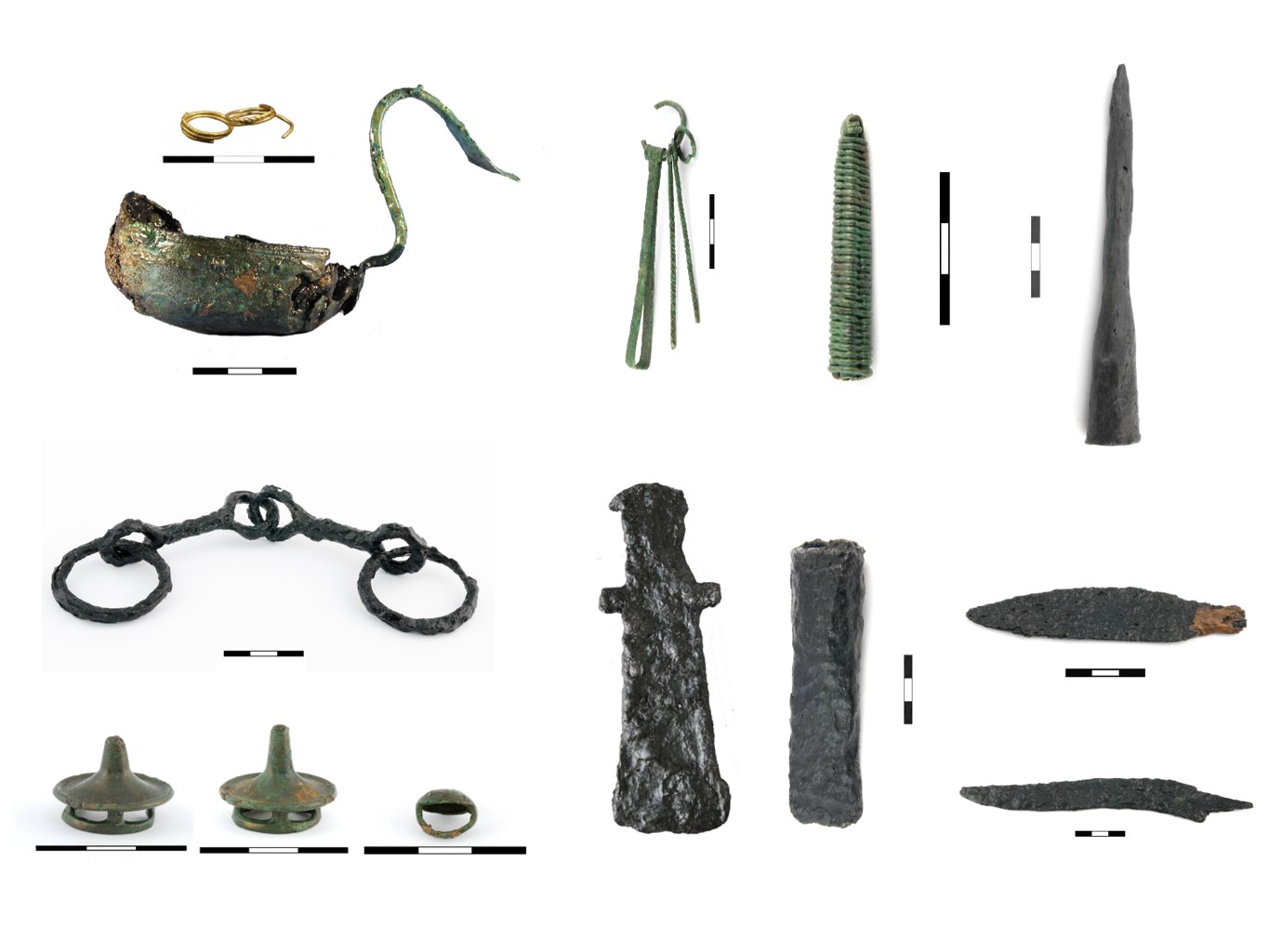
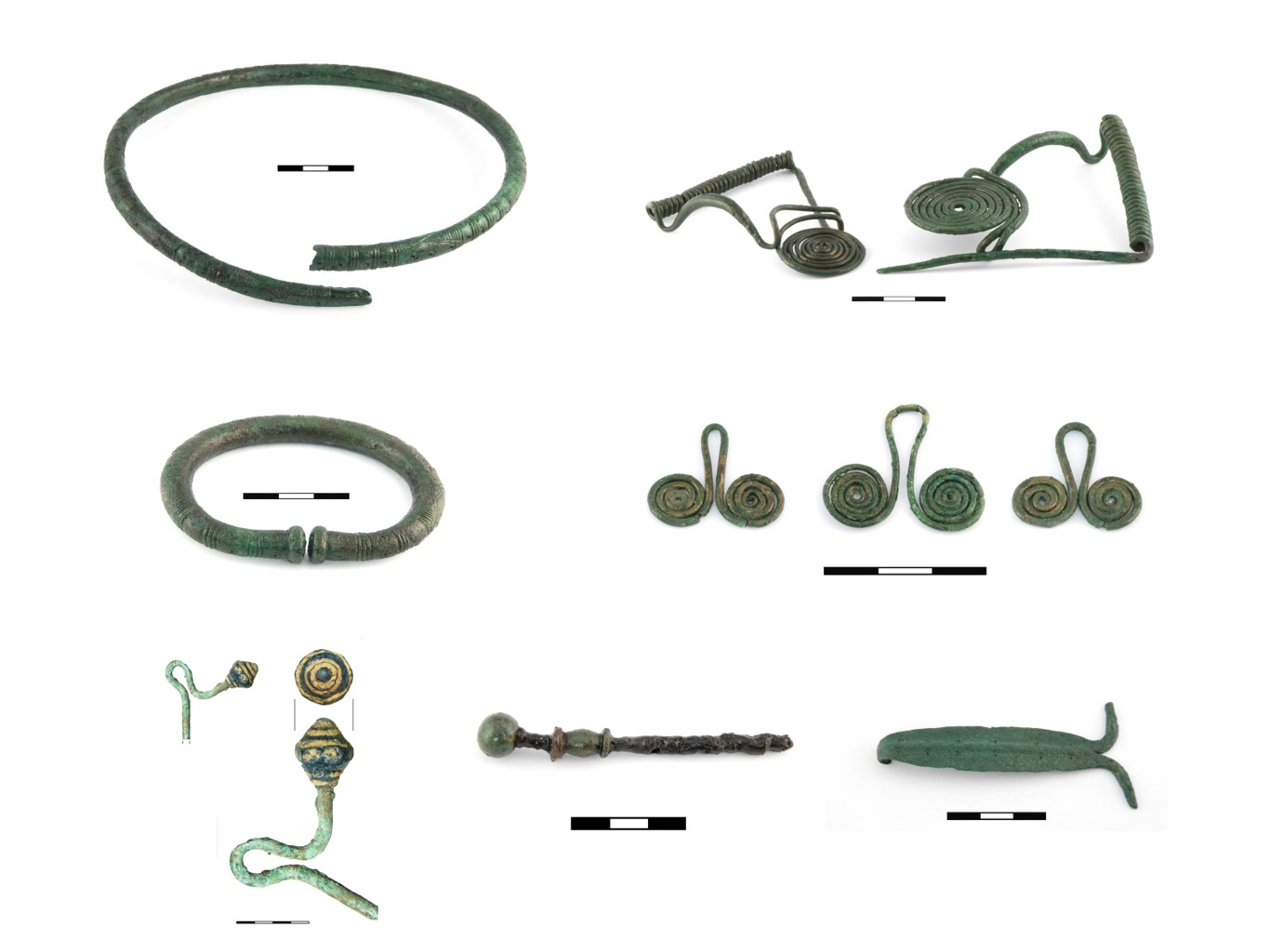
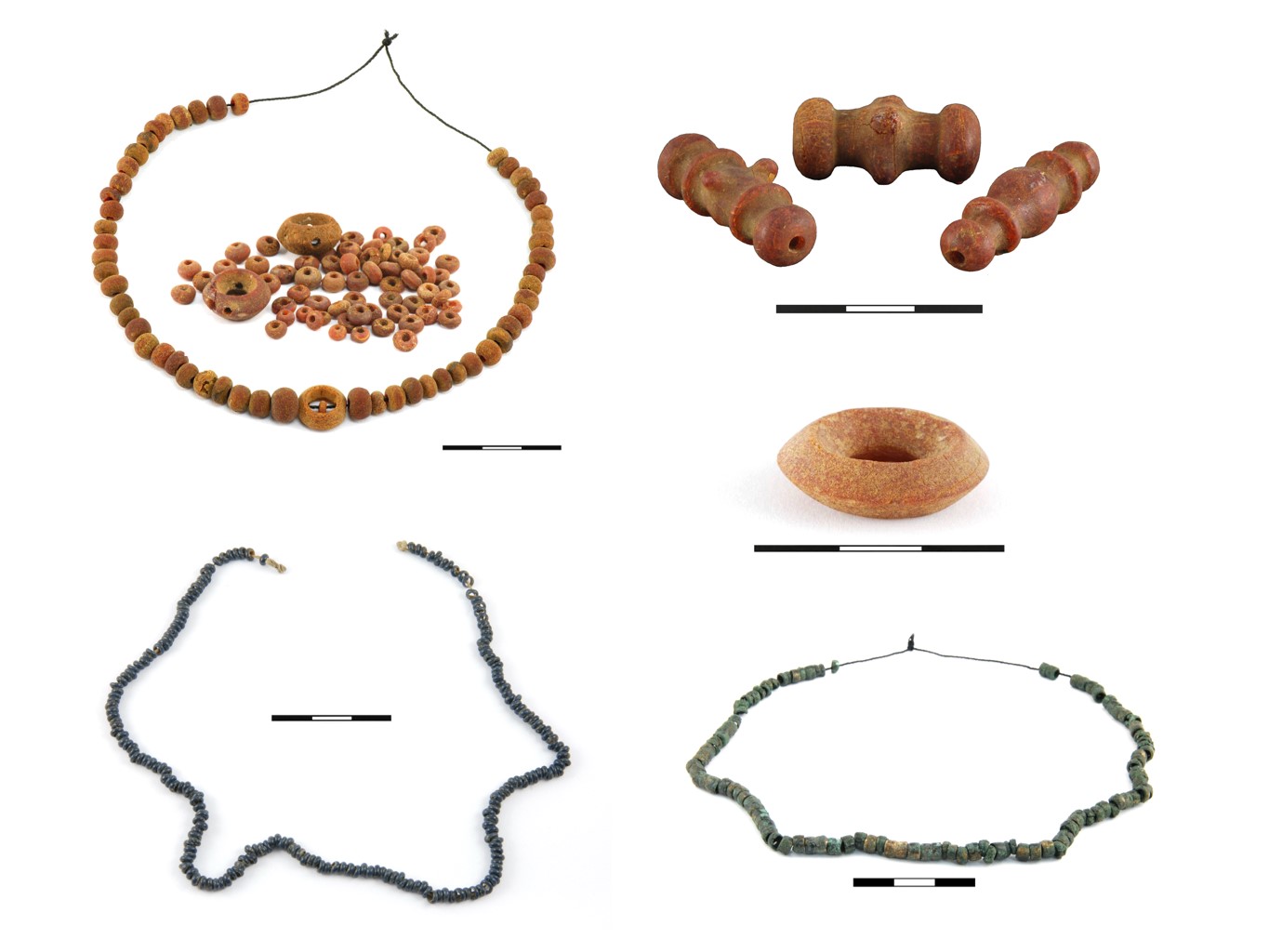
This gallery follows the grammar of elite equipment from Domasław’s Hallstatt horizon. We open with weaponry (a set of eight swords with fittings), also paired with bronze drinkware – large ribbed bowls from graves 390 and 8905. Next come utensils, tools, and horse gear: a bronze ladle and a gold spiral, needle cases and toiletry kits, spearheads, axes (flat ones with lateral lugs and a socketed), and knives of different sizes, alongside riding equipment—tutuli and studs—with a bit. Personal display is captured in adornment and fasteners: bronze necklaces and bracelets (often two), binocular pendants, harp-shaped fibulae, buckles, and pins, including a glass-headed example, swan-neck forms, and a profiled type. The sequence closes with beaded collars: necklaces strung with amber, glass, and bronze beads, and amber rings. Seen together, these sets map the full spectrum of rank-signalling kit—arms and drinkware, instruments of grooming and craft, horse trappings, and high-impact jewellery—integrating Domasław into the broader Hallstatt world while retaining local choices in style and combination.
Ceramic Sets from Graves
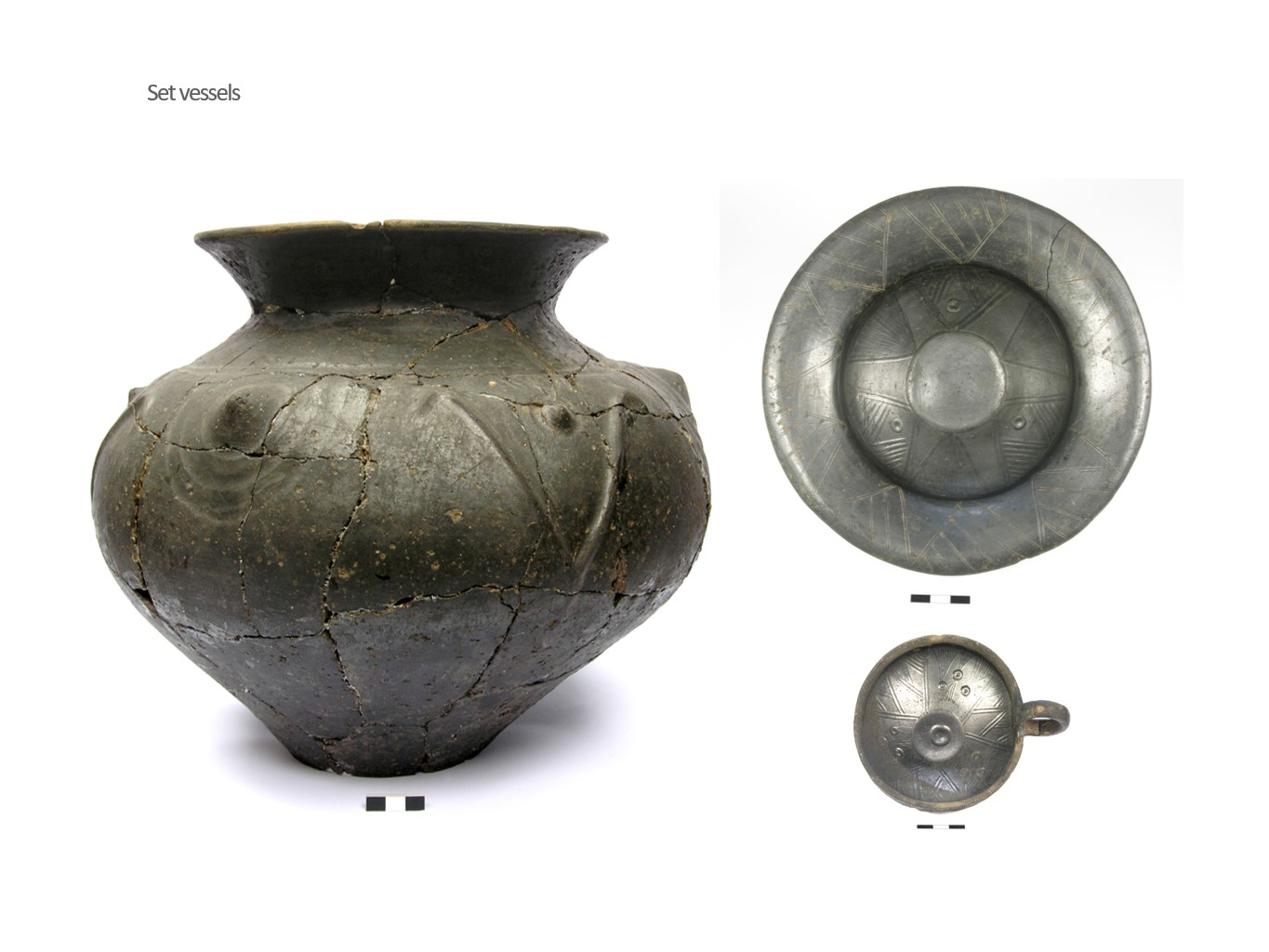
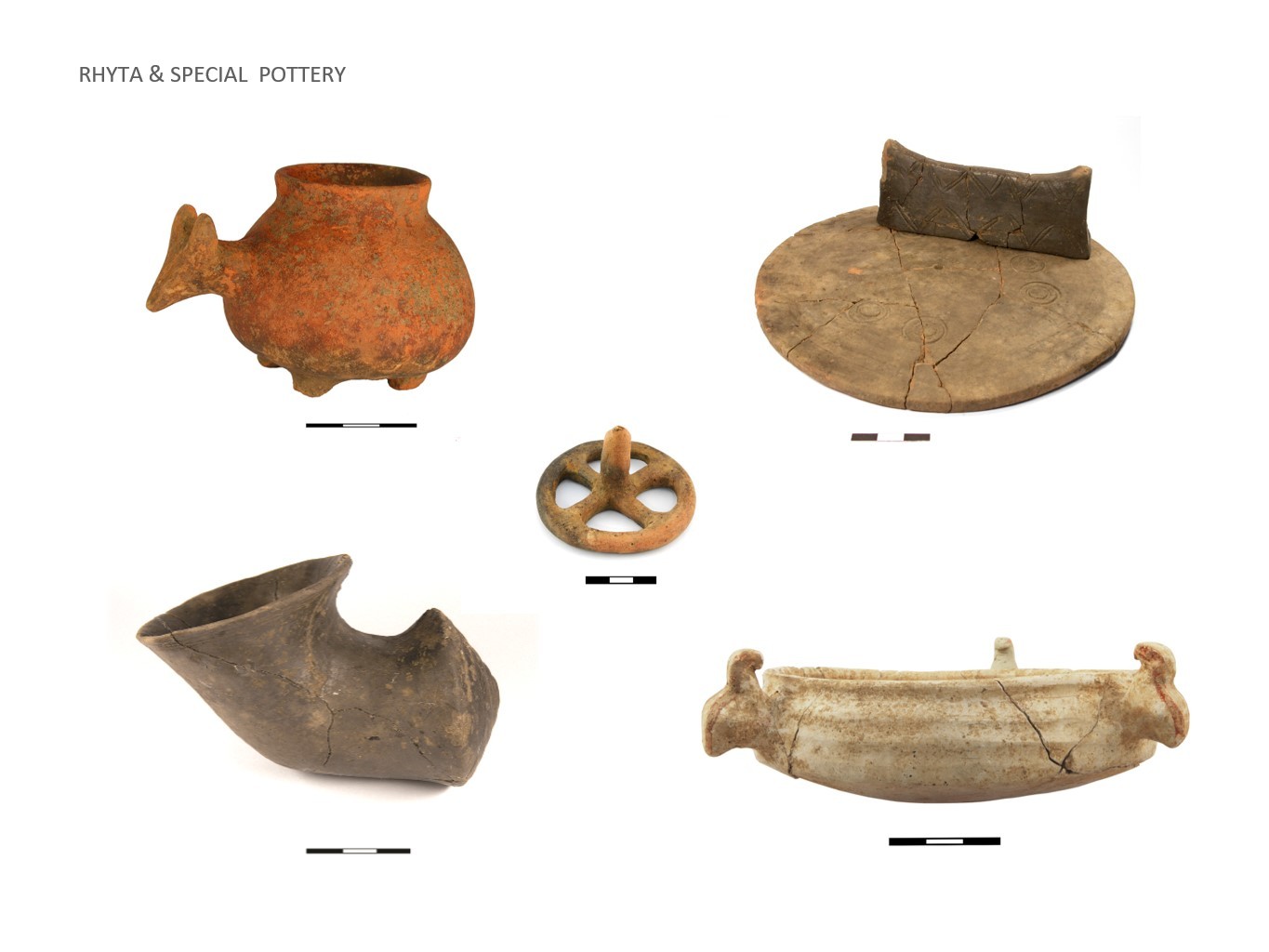
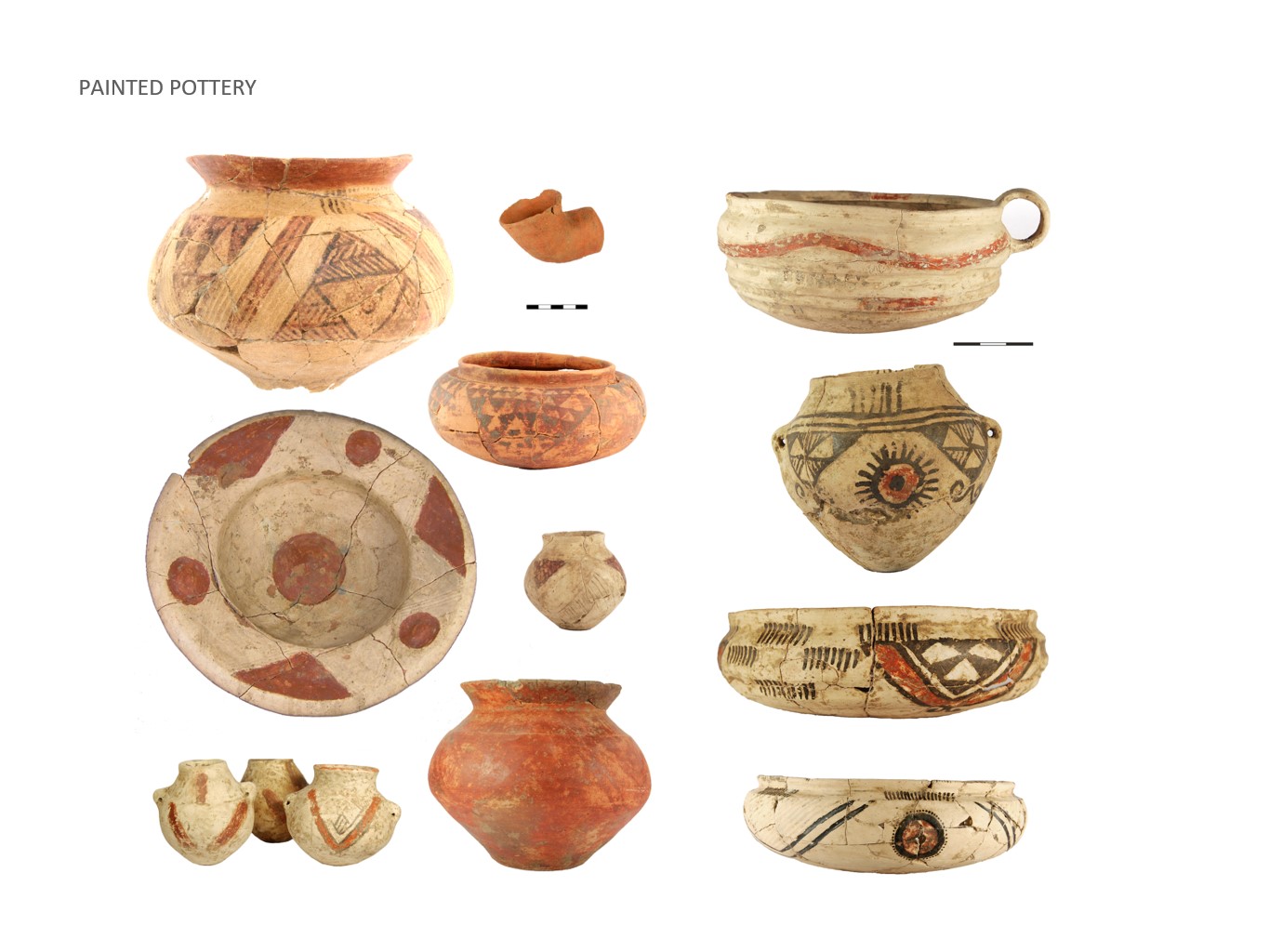
Here we spotlight Hallstatt-period ceramics from Domasław as staged “banquet grammar”. A set of vessels is the core service: conical-neck vases with funnel rims, flanged-rim bowls and fine cups arranged in deliberate multiples (3–6–9–12), a layout used for pouring, serving and drinking during graveside feasts. Rhyta & special forms gathers the performative pieces: a zoomorphic rhyton and a ceramic drinking horn, set beside a plate with a disc-idol, a pintadera (stamp) and a vessel adorned with small birds—objects that signal rite, identity and spectacle. Painted pottery highlights the rise of painting alongside graphite burnishing and fine polishing: crisp linear bands, solar discs and triskelion-like motifs wrapped around Hallstatt shapes, translating supra-regional styles into a Silesian context.
Gallery